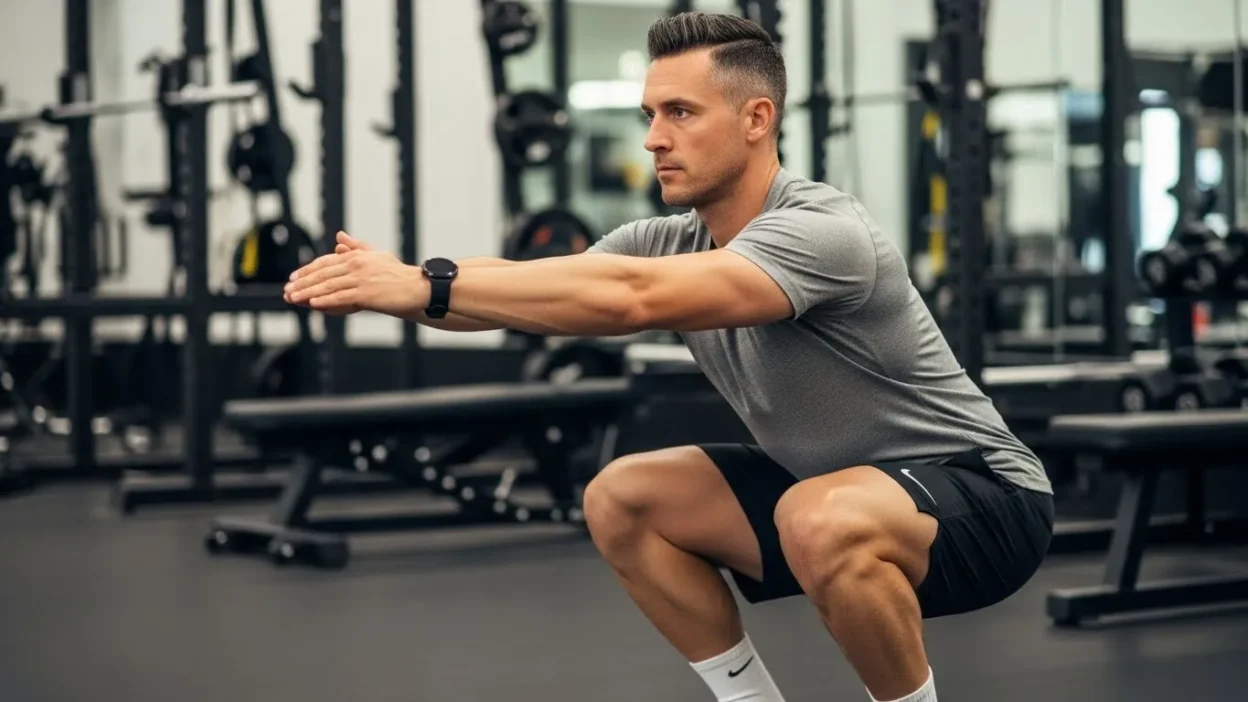
Bodyweight squats are one of the simplest yet most effective exercises you can do to strengthen your lower body, improve mobility, and burn calories all without any equipment.
Perfect for beginners and advanced fitness enthusiasts alike, bodyweight squats target key muscles including your quadriceps, glutes, hamstrings, and core, making them a powerful compound movement.
If you’re looking to tone your legs, build strength, or enhance overall fitness at home, mastering the correct squat form is essential for maximizing results and avoiding injury.
In this comprehensive guide, we’ll cover everything from proper bodyweight squat technique and common mistakes to advanced variations and workout plans. You’ll also learn how squats can help with weight loss, muscle building, and functional fitness.
By the end of this article, you’ll have all the tools you need to confidently incorporate bodyweight squats into your daily routine and see real results.
What Are Body Weight Squats?
Bodyweight squats are a fundamental exercise where you use your own body weight as resistance to strengthen the lower body. Unlike weighted squats, which require dumbbells, barbells, or kettlebells, bodyweight squats rely solely on your muscles to perform the movement. This makes them accessible to anyone, whether you’re working out at home, traveling, or just starting your fitness journey.
At its core, a bodyweight squat involves bending at the knees and hips to lower your body toward the ground while keeping your back straight and chest lifted, then pushing back up to a standing position. This simple motion targets multiple muscles at once, making squats an efficient and effective exercise for overall lower body strength.
Bodyweight squats are also highly versatile. They can be performed slowly for strength building, quickly for cardiovascular benefits, or in high repetitions as part of a fat-burning circuit. Because they don’t require equipment, they’re ideal for beginners who want to learn proper form before progressing to weighted variations.
Additionally, squats improve functional fitness, meaning they enhance movements you perform in daily life, such as sitting, standing, climbing stairs, or lifting objects. Over time, consistent practice of bodyweight squats can lead to stronger legs, firmer glutes, better balance, and improved posture, making them one of the most valuable exercises you can include in any workout routine.
Muscles Worked During Bodyweight Squats
Bodyweight squats are a compound exercise, which means they engage multiple muscle groups simultaneously. This makes them incredibly efficient for building strength, improving balance, and enhancing overall fitness. The primary muscles targeted during squats are in the lower body, but several secondary muscles also contribute to the movement.
Primary Muscles:
- Quadriceps (Front of the Thighs): The quads are the main drivers when you straighten your knees during a squat. Strengthening these muscles improves knee stability and leg power.
- Glutes (Buttocks): Squats heavily activate the gluteus maximus, medius, and minimus, helping to tone and lift the buttocks while supporting hip mobility.
- Hamstrings (Back of the Thighs): Hamstrings work alongside the glutes to control the descent and assist in standing up, ensuring a smooth and controlled motion.
Secondary Muscles:
- Calves: Stabilize the lower leg and ankle during the movement.
- Core Muscles (Abs and Lower Back): The core engages to maintain an upright posture and prevent the back from rounding.
- Hip Flexors: Help with the downward phase and improve flexibility over time.
The combination of primary and secondary muscle engagement makes bodyweight squats not only great for building strength but also for improving coordination, balance, and posture. Over time, regular squatting can enhance athletic performance, support functional movements, and reduce the risk of injury in everyday activities.
By understanding which muscles are worked during squats, you can better focus on proper form and gradually progress to advanced variations that challenge your strength and stability even further.
Benefits of Body Weight Squats
Bodyweight squats offer a wide range of benefits, making them one of the most effective exercises for both beginners and experienced fitness enthusiasts. Because they engage multiple muscles at once, squats not only strengthen your lower body but also improve overall fitness and mobility.
1. Builds Lower Body Strength: Squats primarily target the quadriceps, hamstrings, and glutes. Regular practice leads to stronger, more toned legs and enhanced power for everyday movements like climbing stairs or lifting objects.
2. Improves Mobility and Flexibility: Performing squats with proper form requires hip, knee, and ankle flexibility. Over time, squatting regularly increases your range of motion, reducing stiffness and improving functional movement.
3. Supports Weight Loss: Bodyweight squats burn calories while strengthening muscles. When performed in higher repetitions or as part of a circuit, they increase your heart rate, contributing to fat loss and overall calorie expenditure.
4. Enhances Core Strength and Stability: Maintaining an upright posture during squats engages the core muscles, including the abs and lower back. A stronger core improves balance, posture, and athletic performance.
5. Prevents Injury: Squats strengthen stabilizing muscles around the knees and hips, which can help prevent injuries in daily activities or sports.
6. Convenient and Equipment-Free: One of the biggest advantages of bodyweight squats is that they require no equipment, making them perfect for home workouts or when traveling.
In summary, bodyweight squats are a simple yet powerful exercise that promotes strength, endurance, mobility, and overall fitness. They are an essential component of any workout routine, whether your goal is muscle building, fat loss, or functional fitness.
How to Do Body Weight Squats Correctly (Step-by-Step Guide)
Performing bodyweight squats with proper form is essential to maximize results and prevent injury. Follow these steps to ensure you’re doing squats correctly:
1. Stand Tall: Begin with your feet shoulder-width apart, toes slightly pointed outward. Keep your chest lifted, shoulders back, and gaze forward. Engage your core to stabilize your spine.
2. Initiate the Squat: Push your hips back as if you are sitting in a chair. Keep your weight evenly distributed across your feet, with heels firmly planted on the ground.
3. Bend the Knees: Lower your body by bending your knees and hips simultaneously. Aim to get your thighs parallel to the floor, or as low as your flexibility allows, without letting your knees extend past your toes.
4. Keep Proper Alignment: Ensure your knees track in line with your toes. Avoid letting them collapse inward. Keep your back straight and chest open throughout the movement.
5. Engage Muscles on the Way Up: Press through your heels to return to the standing position. Squeeze your glutes at the top and maintain core engagement.
6. Breathe Correctly: Inhale as you lower down and exhale as you push back up. Controlled breathing supports stability and endurance.
Tips for Beginners: Start with 10–15 repetitions per set, focusing on form rather than speed. Use a chair for support if needed, and gradually increase reps as you build strength and confidence.
Mastering bodyweight squat form is the foundation for progress. Proper technique ensures you target the right muscles while minimizing stress on your knees and lower back.
Common Squat Mistakes (And How to Fix Them)
Even experienced exercisers can make mistakes when performing bodyweight squats, which can limit results or increase the risk of injury. Recognizing these common errors and learning how to correct them is essential for safe and effective training.
1. Knees Collapsing Inward: One of the most frequent mistakes is letting the knees cave toward each other. This puts undue stress on the joints.
Fix: Focus on pushing your knees outward in line with your toes and engage your glutes and hip muscles during the movement.
2. Heels Lifting Off the Ground: Rising onto your toes reduces stability and shifts pressure to your knees.
Fix: Keep your heels firmly planted. If needed, practice squatting near a wall or on a slightly elevated surface to improve ankle mobility.
3. Rounding the Back: Leaning forward and rounding the spine can strain your lower back.
Fix: Keep your chest lifted, shoulders back, and core tight. Imagine holding a small weight against your chest to maintain posture.
4. Squatting Too Shallow: Not lowering enough reduces muscle activation and limits benefits.
Fix: Aim to bring your thighs parallel to the floor. Over time, work on flexibility and hip mobility to squat deeper safely.
5. Moving Too Fast: Rapid squats can compromise form and reduce muscle engagement.
Fix: Slow down the movement, controlling both the downward and upward phases. Focus on quality reps rather than quantity.
By correcting these common mistakes, you’ll improve the effectiveness of your squats, target the right muscles, and reduce the risk of injury. Proper form is always more important than the number of repetitions.
Body Weight Squats for Beginners
Bodyweight squats are an excellent starting point for anyone new to fitness because they are simple, effective, and require no equipment. For beginners, the focus should be on learning proper form, building strength gradually, and avoiding injury.
Starting Position: Stand with your feet shoulder-width apart, toes slightly pointing outward. Engage your core, keep your chest lifted, and look straight ahead. Maintaining this posture is crucial for stability and balance.
Beginner Technique Tips:
- Shallow Squats: Start by squatting only partway down if you lack flexibility or strength. Over time, work toward thighs parallel to the floor.
- Controlled Movement: Move slowly and focus on muscle engagement rather than speed. Quality is far more important than quantity.
- Chair Support: If balance is a challenge, use a chair behind you. Sit back lightly and stand up, gradually reducing dependence on support.
Repetition Guidelines: Beginners should aim for 10–15 squats per set, performing 2–3 sets per session. Gradually increase repetitions and sets as strength improves.
Progression: Once comfortable with standard bodyweight squats, you can try variations like sumo squats, pulse squats, or adding short holds at the bottom position to increase intensity.
Consistency is Key: Practicing bodyweight squats regularly, even 3–4 times a week, helps build lower body strength, improve flexibility, and prepare your muscles for more advanced exercises.
By starting with proper form and manageable repetitions, beginners can safely develop strength, enhance mobility, and gain confidence before moving on to advanced squat variations.
Body Weight Squats for Weight Loss
Bodyweight squats are not just a strength-building exercisethey can also play a powerful role in weight loss. Because squats engage multiple large muscle groups, they elevate your heart rate and increase calorie burn, making them an effective addition to any fat-loss routine.
How Squats Burn Fat: When you perform squats, your quads, glutes, hamstrings, and core work together, creating a high level of muscular engagement. This compound movement demands energy, which helps burn calories both during and after your workout. Additionally, building lean muscle through squats increases your resting metabolic rate, meaning your body burns more calories even at rest.
Incorporating Squats into Fat-Burning Workouts:
- High Repetition Sets: Performing 20–30 squats per set with short rest periods can create a cardio-like effect.
- Squat Circuits: Combine squats with push-ups, lunges, or burpees in a circuit to increase intensity and overall calorie burn.
- Jump Squats or Pulse Squats: These variations add explosive movement, boosting cardiovascular demand and fat-burning potential.
Consistency Matters: Doing squats regularly, ideally 3–5 times per week, in combination with a balanced diet and other forms of exercise like cardio, will yield the best weight-loss results.
Bonus Tip: Pair your squats with a full-body strength routine to maintain muscle while losing fat. Not only will your legs and glutes become toned, but your metabolism will also get a significant boost.
Bodyweight squats are an efficient, accessible, and effective way to burn calories, build muscle, and accelerate fat lossall without any equipment.
Advanced Bodyweight Squat Variations
Once you have mastered standard bodyweight squats, adding advanced variations can increase intensity, target different muscles, and keep your workouts challenging. These variations are excellent for improving strength, power, and overall fitness.
1. Jump Squats: A plyometric version of the squat where you explode upward from the squat position and land softly. Jump squats boost cardiovascular endurance, improve power, and increase calorie burn.
2. Pulse Squats: In this variation, you hold a low squat and pulse up and down slightly without standing fully. Pulse squats maximize time under tension, which enhances muscle endurance and glute activation.
3. Sumo Squats: With a wider stance and toes pointed outward, sumo squats target the inner thighs in addition to the glutes and quads. They improve hip flexibility and strengthen different leg muscles.
4. Bulgarian Split Squats: Performed with one foot elevated behind you on a bench or chair, this single-leg squat variation intensifies glute and quad engagement while improving balance and stability.
5. Pistol Squats: A challenging single-leg squat that requires strength, balance, and flexibility. It targets the entire lower body and core but should be attempted only after building sufficient strength.
6. Wall Sit: Holding a seated position against a wall strengthens the quads, glutes, and core, improving muscular endurance and stability.
Incorporating these variations into your workout routine prevents plateaus and ensures comprehensive lower body development. Start with easier variations, progress gradually, and focus on proper form to maximize results and avoid injury.
How Many Squats Should You Do Per Day
Determining how many bodyweight squats to do per day depends on your fitness level, goals, and overall workout routine. While squats are highly effective, doing too many without proper progression can lead to fatigue or injury, especially for beginners.
Beginners: If you’re new to squats, start with 2–3 sets of 10–15 repetitions, performed 3–4 times per week. Focus on mastering form rather than hitting high numbers. Short rest periods between sets help build endurance without overloading your muscles.
Intermediate: Once you’re comfortable with basic squats, increase to 3–4 sets of 20–30 repetitions, or try incorporating advanced variations like pulse squats, sumo squats, or wall sits. You can perform squats daily if you allow proper recovery, but alternating intensity or combining with other lower-body exercises is ideal.
Advanced: Experienced exercisers can aim for 4–6 sets of 30–50 repetitions, or include explosive variations such as jump squats or pistol squats. For fat-burning or strength-building circuits, integrate squats into a full-body routine 4–6 times per week.
Listen to Your Body: Recovery is essential. If your legs feel excessively sore, take a rest day or focus on stretching and mobility exercises. Over time, you can gradually increase repetitions, sets, and intensity to match your strength and endurance.
Key Takeaway: There’s no one-size-fits-all number, but consistency and proper form are more important than sheer volume. Regular bodyweight squats, even in moderate amounts, can lead to stronger legs, firmer glutes, and improved overall fitness.
Sample Bodyweight Squat Workout Plans
Bodyweight squats can be incorporated into a variety of workout routines, whether your goal is strength, endurance, or weight loss. Here are a few sample plans for different fitness levels.
1. Beginner 7-Day Plan:
- Day 1, 3, 5: 2 sets of 10–15 standard squats
- Day 2, 4: Light stretching and mobility exercises
- Day 6: 2 sets of 10–15 sumo squats
- Day 7: Rest
2. 30-Day Squat Challenge:
- Week 1: 15 squats per set, 2 sets per day
- Week 2: 20 squats per set, 2–3 sets per day
- Week 3: 25–30 squats per set, 3 sets per day
- Week 4: 30–40 squats per set, include pulse or jump squats for one set daily
This gradual progression builds strength and endurance while preventing overtraining.
3. Fat-Burning Circuit (Intermediate):
- 20 jump squats
- 15 push-ups
- 20 pulse squats
- 30-second plank
- Rest 60 seconds, repeat 3–4 rounds
This combination increases heart rate, burns calories, and strengthens multiple muscle groups.
4. Strength-Focused Routine (Advanced):
- 10 pistol squats per leg
- 15 Bulgarian split squats per leg
- 20 sumo squats
- Wall sit hold for 45–60 seconds
- Repeat 3 sets
This routine targets the glutes, quads, hamstrings, and core for maximum lower body strength.
These sample plans show the versatility of bodyweight squats. Beginners can start slowly, while intermediate and advanced exercisers can challenge themselves with variations and circuits. Consistency is keyincorporate these workouts into your weekly routine for noticeable results in strength, tone, and endurance.
FAQs:
1. Do squats make your butt bigger?
Yes, bodyweight squats target the glute muscles, helping tone and lift your buttocks. Over time, consistent squatting can increase muscle firmness and shape.
2. Can squats reduce belly fat?
While squats help burn calories and increase metabolism, they cannot target belly fat specifically. Combining squats with cardio, full-body strength training, and a balanced diet is most effective for fat loss.
3. Are squats enough for leg day?
For beginners, bodyweight squats are sufficient to strengthen legs and glutes. Intermediate and advanced exercisers may benefit from adding weighted squats or additional lower-body exercises like lunges and deadlifts for full leg development.
4. How long until I see results from squats?
Visible results vary by individual, depending on frequency, intensity, and diet. Most people notice improved strength and muscle tone in 4–6 weeks with consistent practice.
5. Can I do squats every day?
Yes, daily squats are possible if intensity and volume are managed. Beginners should start with 3–4 times per week, while advanced exercisers can include squats in daily routines with proper recovery.
6. What is the correct form for squats?
Stand with feet shoulder-width apart, chest lifted, core engaged, and heels on the floor. Lower your hips back and down while keeping knees in line with toes, then push through heels to stand.
7. How many squats should I do per set?
Beginners: 10–15 reps per set
Intermediate: 20–30 reps per set
Advanced: 30–50+ reps per set, including variations like jump or pistol squats
These FAQs answer common questions, helping beginners and advanced users safely perform bodyweight squats while maximizing results.
Conclusion:
Bodyweight squats are one of the most versatile and effective exercises you can include in any fitness routine. They require no equipment, target multiple muscle groups, and provide benefits ranging from increased lower-body strength to improved flexibility, balance, and posture.
If you are a beginner just learning the movement or an advanced fitness enthusiast looking for challenging variations, squats can be adapted to suit your level and goals.
Regular practice of bodyweight squats can help tone your legs and glutes, support weight loss, and enhance overall functional fitness.
Proper form is essential to maximize results and prevent injury, so beginners should focus on mastering technique before increasing repetitions or attempting advanced variations like jump squats or pistol squats.
Incorporating a mix of squat types into your routine, along with complementary exercises and a balanced diet, ensures well-rounded fitness progress.
Consistency is the key to success. Even performing squats a few times per week can yield noticeable improvements in strength, endurance, and muscle tone over time.
Advanced users can integrate squats into high-intensity circuits or challenges for additional calorie burn and muscle development.
In short, bodyweight squats are more than just a basic exercisethey are a cornerstone for building a strong, functional, and lean lower body.
Start incorporating squats into your routine today, focus on form, gradually increase intensity, and you’ll experience the long-term benefits of one of the most effective bodyweight exercises available.