
Horses are powerful animals, but like all living creatures, they have limits when it comes to carrying weight. Understanding how much weight a horse can carry is essential for the safety of both the rider and the horse.
Overloading a horse can lead to discomfort, injuries, and long-term health problems, while riding within safe limits ensures a happy, healthy, and strong horse. In general, most healthy horses can safely carry 15–20% of their body weight, including the rider, saddle, and any equipment.
However, this rule can vary depending on factors such as breed, size, age, fitness, and terrain. Whether you’re a beginner rider, a parent choosing a pony for your child, or an experienced equestrian, knowing the safe weight limits for your horse is crucial.
This guide will explore the science, calculations, and practical tips to ensure safe and responsible riding.
Quick Answer: Horse Carrying Capacity Explained
When it comes to how much weight a horse can carry, a simple rule of thumb is that a healthy horse can bear 15–20% of its body weight, including the rider, saddle, and any additional equipment. For example, a 1,000-pound horse could safely carry 150–200 pounds in total. Exceeding this limit increases the risk of physical strain, back injuries, joint problems, and long-term damage to the horse’s health.
It’s important to remember that the total weight is not just the rider’s body weight. Saddles, bridles, and other gear contribute to the load, so they must be included in the calculation. Additionally, a horse’s ability to carry weight depends on several critical factors, such as breed, size, age, fitness, and the type of terrain. A short, uneven trail ride may require less weight than a flat, open-field ride.
Rider skill and balance also play a significant role. An experienced rider with good posture distributes weight evenly, reducing strain on the horse’s back. Conversely, poor riding posture or sudden movements can make a manageable load harmful. By understanding these basics and adhering to the 15–20% rule, you can ensure your horse remains comfortable, healthy, and ready for many years of riding.
The 15–20% Rule: Science Behind Safe Weight Limits
The widely cited 15–20% rule is the foundation for understanding how much weight a horse can safely carry. This guideline comes from veterinary research and equine science, which studied how different loads affect a horse’s musculoskeletal system. Essentially, carrying more than 20% of a horse’s body weight can place excessive stress on their spine, joints, and muscles, increasing the risk of fatigue, soreness, and long-term injuries.
For example, a 1,200-pound horse carrying 300 pounds (25% of its weight) may initially seem fine, but repeated rides at this load can lead to back pain, reduced performance, and even lameness. The horse’s conformation and build also influence how much weight it can safely bear. Stockier breeds like Quarter Horses or draft crosses may handle loads closer to the upper limit, while lighter breeds like Arabians may be better suited to the lower end of the 15–20% range.
Age and conditioning matter as well. Young or senior horses, or those not in proper fitness, may struggle with loads that a healthy, well-trained horse can carry comfortably. Rider skill is equally critical: a balanced rider distributes weight evenly, reducing stress on the horse’s back, while poor posture or abrupt movements amplify strain.
By following the 15–20% guideline and considering these factors, riders can protect their horse’s health, enhance performance, and ensure safe, enjoyable riding experiences for both horse and rider.
Factors That Affect How Much Weight a Horse Can Carry
While the 15–20% rule provides a general guideline, several factors influence a horse’s true carrying capacity. Understanding these factors helps riders make informed decisions and avoid overloading their horse.
1. Horse Size and Body Weight: Naturally, larger horses can carry more weight than smaller horses. For example, a 1,500-pound draft horse can safely carry 225–300 pounds, while a 900-pound pony may only manage 135–180 pounds.
2. Breed and Build: Certain breeds are structurally better suited for carrying weight. Stock horses and draft breeds typically have strong backs and sturdy limbs, allowing them to handle loads near the upper limit. In contrast, lighter breeds like Arabians or Thoroughbreds are more delicate and perform best with loads closer to 15% of their body weight.
3. Age and Fitness: A young horse may not yet have the muscle development to carry heavy loads, while older horses may experience joint stiffness. Well-conditioned horses with strong back and core muscles can safely carry more weight than unfit horses.
4. Rider Skill and Balance: An experienced rider distributes weight evenly, reducing strain on the horse. Unbalanced riders, sudden movements, or improper posture increase stress on the back and legs.
5. Saddle and Equipment: The weight of the saddle, bridle, and other gear must be included in the total load. Poorly fitting saddles can concentrate pressure, making even a light load harmful.
6. Terrain and Duration: Long rides, hilly trails, or rough terrain increase physical demand. A horse may safely carry a certain weight on flat ground but struggle with the same load over uneven trails.
By evaluating these factors together, riders can ensure safe, comfortable, and responsible riding for their horse.
Horse Carrying Capacity by Breed (Examples)
Different horse breeds vary significantly in their body structure, weight, and strength, which affects how much weight they can safely carry. Understanding these differences helps riders choose the right horse and set appropriate limits.
1. Arabian Horses: Arabians are typically light and elegant, averaging 900–1,100 pounds. Using the 15–20% rule, an Arabian can safely carry 135–220 pounds, including saddle and gear. They are ideal for skilled riders or lighter loads.
2. Quarter Horses: Stocky and muscular, Quarter Horses usually weigh 1,000–1,300 pounds. They can comfortably carry 150–260 pounds. Their strong backs make them suitable for general riding and ranch work.
3. Thoroughbreds: Known for racing and athleticism, Thoroughbreds weigh 1,000–1,200 pounds. They are built for speed rather than heavy loads, so their safe carrying range is 150–240 pounds.
4. Draft Horses (Clydesdales, Percherons, etc.): Draft breeds are massive and powerful, weighing 1,800–2,400 pounds. They can carry 270–480 pounds safely, making them ideal for heavier riders or pulling loads.
5. Ponies (Shetlands, Welsh Ponies): Small ponies weigh 400–600 pounds and can safely carry 60–120 pounds, making them perfect for children. Adult riders generally exceed their safe load limit.
6. Mixed or Cross Breeds: Carrying capacity varies depending on size and build. Always calculate based on actual body weight and assess fitness.
Including breed-specific guidance helps riders avoid overloading their horses and ensures safe, comfortable rides. A clear understanding of breed, weight, and physical condition is key to responsible horsemanship.
How to Calculate How Much Weight Your Horse Can Carry
Calculating how much weight your horse can safely carry is simple when you follow the 15–20% rule and account for all contributing factors. Here’s a step-by-step guide:
1. Determine Your Horse’s Weight:
Weigh your horse using a livestock scale or a weight tape. Accuracy is important because carrying capacity is calculated as a percentage of the horse’s body weight.
2. Apply the 15–20% Rule:
Multiply your horse’s weight by 0.15 to 0.20 to find the safe weight range. For example, a 1,200-pound horse:
- 1,200 × 0.15 = 180 pounds (lower safe limit)
- 1,200 × 0.20 = 240 pounds (upper safe limit)
This means the horse can carry 180–240 pounds, including rider and gear.
3. Include Saddle and Equipment:
The saddle, bridle, and other riding equipment add weight. If the saddle weighs 20 pounds, subtract it from the total carrying capacity to determine the maximum rider weight.
4. Consider Rider Skill and Balance:
A balanced rider distributes weight more evenly, allowing the horse to carry loads safely within this range. Unbalanced riding may reduce the safe limit slightly.
5. Adjust for Terrain and Duration:
Long rides, hilly trails, or uneven terrain increase strain. For challenging conditions, aim for the lower end of the safe weight range.
6. Check Horse Health:
Always monitor your horse for signs of fatigue, soreness, or discomfort during and after rides.
By following these steps, riders can safely calculate load limits, protect their horse’s health, and enjoy worry-free riding.
Can Horses Carry Heavy Riders Safely?
Many riders wonder if horses can carry heavier-than-average riders safely. While some horses may manage occasional heavier loads, it is generally not recommended to exceed the safe carrying range of 15–20% of the horse’s body weight, including saddle and equipment. Consistently overloading a horse can lead to back pain, joint strain, and long-term health issues.
Occasional rides slightly above the recommended limit may be tolerated by well-conditioned, strong, and healthy horses, particularly larger breeds like draft horses. However, riders must be cautious: a heavier rider increases fatigue and decreases the horse’s ability to maintain balance, especially on uneven terrain. Uneven weight distribution or poor rider posture can further amplify strain.
Horse welfare should always come first. A heavy rider may consider using a larger, sturdier horse, ensuring proper conditioning, and choosing short, easy rides. Monitoring the horse during and after the ride is essential; signs of soreness, reluctance to move, or abnormal gait indicate that the load was excessive.
It’s also important to distinguish between occasional tolerance and safe long-term practices. While some horses can handle heavier loads for short periods, consistently exceeding their carrying capacity is unethical and unsafe. Responsible riders prioritize their horse’s health, focusing on fitness, proper gear, balanced riding, and realistic load limits to maintain comfort and longevity.
Horse Carrying vs Pulling Weight: Important Difference
It’s a common misconception that a horse can carry as much weight as it can pull. In reality, carrying and pulling are very different activities, and horses can safely pull far more than they can carry.
When a horse carries weight on its back, all the load rests directly on its spine, muscles, and joints. This can strain the back, shoulders, and legs, especially if the rider or gear is heavy or improperly balanced. Even a strong horse has limits, generally 15–20% of its body weight, to avoid injury.
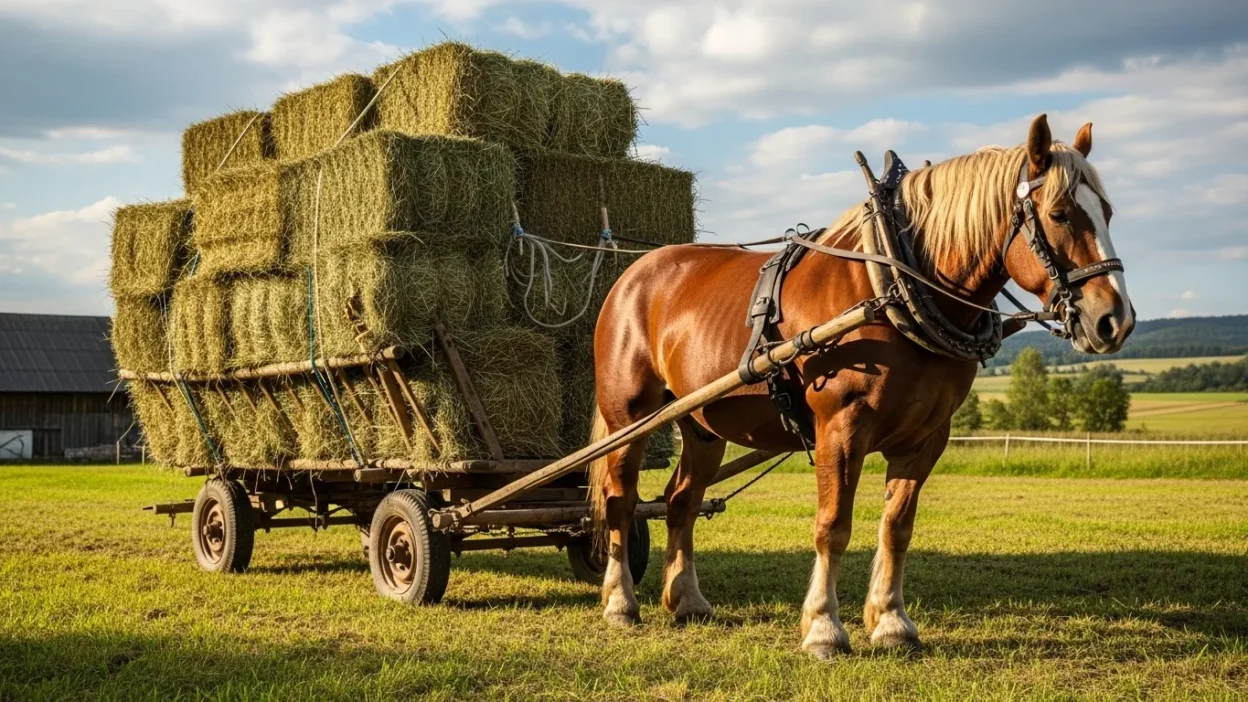
Pulling weight, however, involves moving a load across the ground, often in a cart, wagon, or sled. The horse’s powerful hindquarters and shoulders generate forward motion, and wheels or runners reduce friction. As a result, horses can pull loads two to three times their body weight, sometimes more, depending on breed, conditioning, and terrain. Draft horses, for example, excel at pulling heavy loads due to their strength and large frame, while smaller horses and ponies are less capable.
Despite this difference, safety is essential in both cases. When pulling, riders must ensure proper harness fit, secure load attachment, and avoid abrupt starts or stops. Similarly, when carrying, the horse’s back must be protected with a well-fitting saddle, balanced rider, and appropriate weight.
Understanding this distinction helps horse owners plan safe rides and work, protecting the horse’s health while maximizing performance.
Signs a Horse Is Carrying Too Much Weight
Even when following general guidelines, it’s important to observe your horse closely for signs of strain or overload. Horses cannot verbally communicate discomfort, so recognizing behavioral and physical indicators is crucial to prevent injuries.
1. Behavioral Signs:
- Reluctance to move forward or sudden stops
- Stumbling, tripping, or uneven gait
- Tail swishing, head tossing, or pinned ears
- Refusal to jump or perform previously easy maneuvers
These behaviors often indicate discomfort or fatigue caused by excess weight.
2. Physical Signs:
- Soreness along the back or withers
- Muscle trembling, stiffness, or tense posture
- Sweating in unusual areas, such as the back under the saddle
- Shortened stride or difficulty maintaining rhythm
Repeated exposure to heavy loads can lead to chronic issues like back pain, joint inflammation, or lameness.
3. Long-Term Effects:
Consistently overloading a horse may result in permanent musculoskeletal damage, decreased performance, and even early retirement from riding.
4. Immediate Action:
If any signs appear during or after a ride, dismount the horse, allow rest, and assess for injuries. Adjust weight limits, riding duration, or terrain difficulty before the next ride.
By monitoring both behavioral cues and physical condition, riders can ensure their horse remains healthy, comfortable, and capable of performing safely. Responsible riders prioritize preventive care and weight management to maintain their horse’s longevity and overall welfare.
(FAQs)
1. How much weight can a 1,000 lb horse carry?
A 1,000-pound horse can safely carry 150–200 pounds, including rider and equipment, based on the 15–20% rule.
2. Can a horse carry two people?
Generally, no. Carrying two riders usually exceeds safe limits for most horses and can cause serious strain or injury.
3. Can ponies carry adults safely?
Most ponies weigh 400–600 pounds and can carry 60–120 pounds safely. Adult riders often exceed this limit, so ponies are best for children.
4. Does rider height matter more than weight?
No. It is total weight (rider + gear) that matters. Taller riders may appear heavy, but actual weight determines safety.
5. Does saddle weight count?
Yes. Saddles, bridles, and other equipment are part of the total load and must be included in calculations.
6. Can draft horses carry more weight than light breeds?
Yes. Draft horses are larger and stronger, so they can carry heavier loads safely, sometimes up to 480 pounds or more.
7. How can I calculate my horse’s carrying capacity?
Use the 15–20% rule: horse weight × 0.15–0.20 = safe total load (rider + gear).
8. Can a horse carry more weight on flat ground than on hills?
Yes. Rough or hilly terrain increases strain, so always reduce weight for challenging conditions.
9. How does rider balance affect the horse?
Balanced riders distribute weight evenly, reducing strain on the back and joints, allowing safer riding even at the higher end of the safe range.
10. What are signs a horse is overloaded?
Reluctance to move, stumbling, sweating, short stride, tense muscles, or back soreness.
11. Can overloading a horse cause long-term damage?
Yes. Consistently exceeding safe limits may cause back pain, joint issues, and lameness.
12. Is the 15–20% rule the same for all horses?
No. It’s a general guideline. Breed, age, fitness, terrain, and riding duration may require adjustments.
Conclusion:
Understanding how much weight a horse can carry is essential for the health, comfort, and performance of your horse. Following the 15–20% rule including the rider, saddle, and equipment provides a reliable guideline for safe riding. However, this rule is not absolute; factors such as breed, size, age, fitness, rider balance, and terrain all influence a horse’s true carrying capacity.
Responsible riders prioritize horse welfare by monitoring for signs of strain or discomfort, using properly fitted saddles, and adjusting weight and riding conditions as needed.
Draft horses, larger stock breeds, and well-conditioned horses can carry more weight, while lighter breeds, ponies, or younger and older horses require more caution.
By applying science-based calculations, observing your horse closely, and riding within safe limits, you ensure a healthy, happy, and long-lasting partnership with your horse.
Safe weight management not only prevents injuries and long-term damage but also enhances the overall riding experience for both horse and rider. Always remember: the horse’s well-being comes first, and safety should guide every ride.

James Patterson is a bestselling author known for his thrilling storytelling, unforgettable characters, and page-turning mysteries. His work has inspired readers across the world with stories full of suspense, love, and emotion. At Talk2Flirt.com, we highlight his creative spark — showing how passion, words, and imagination can connect hearts just like the perfect conversation.