
Rice is one of the most widely consumed staples in the world, but when it comes to weight loss, it often gets a bad reputation. Many people wonder: “Is rice good for losing weight?”
or assume that cutting out rice is the only way to slim down. The truth is, rice itself is not inherently fattening it’s the type, portion size, and how it’s prepared that makes the difference.
White rice, brown rice, wild rice, and other varieties each have unique nutritional profiles, affecting how they impact blood sugar, satiety, and metabolism.
Incorporating rice thoughtfully into a balanced diet can actually support weight management rather than hinder it.
In this guide, we’ll break down the nutritional facts, compare rice types, bust common myths, and provide actionable tips for enjoying rice while still reaching your weight-loss goals.
By the end, you’ll know exactly how to include rice in a healthy, slimming meal plan.
Nutritional Profile of Rice
Understanding rice’s nutritional makeup is key to knowing how it fits into a weight-loss plan. Rice is primarily a carbohydrate source, providing quick energy for the body. A 1-cup (about 158 grams) serving of cooked white rice contains roughly 205 calories, 45 grams of carbohydrates, 4 grams of protein, and almost no fat. Brown rice, on the other hand, has slightly more calories—about 215 per cup—but offers 3.5 grams of fiber, which promotes fullness and helps control appetite.
The fiber in brown rice slows digestion, leading to a more gradual rise in blood sugar levels. This can reduce cravings and prevent energy crashes, making it more suitable for weight management. Rice also contains essential vitamins and minerals. Brown rice is a good source of magnesium, phosphorus, manganese, and B vitamins, which support metabolism and overall health. White rice is often enriched with some vitamins, but it lacks the fiber found in its whole-grain counterpart.
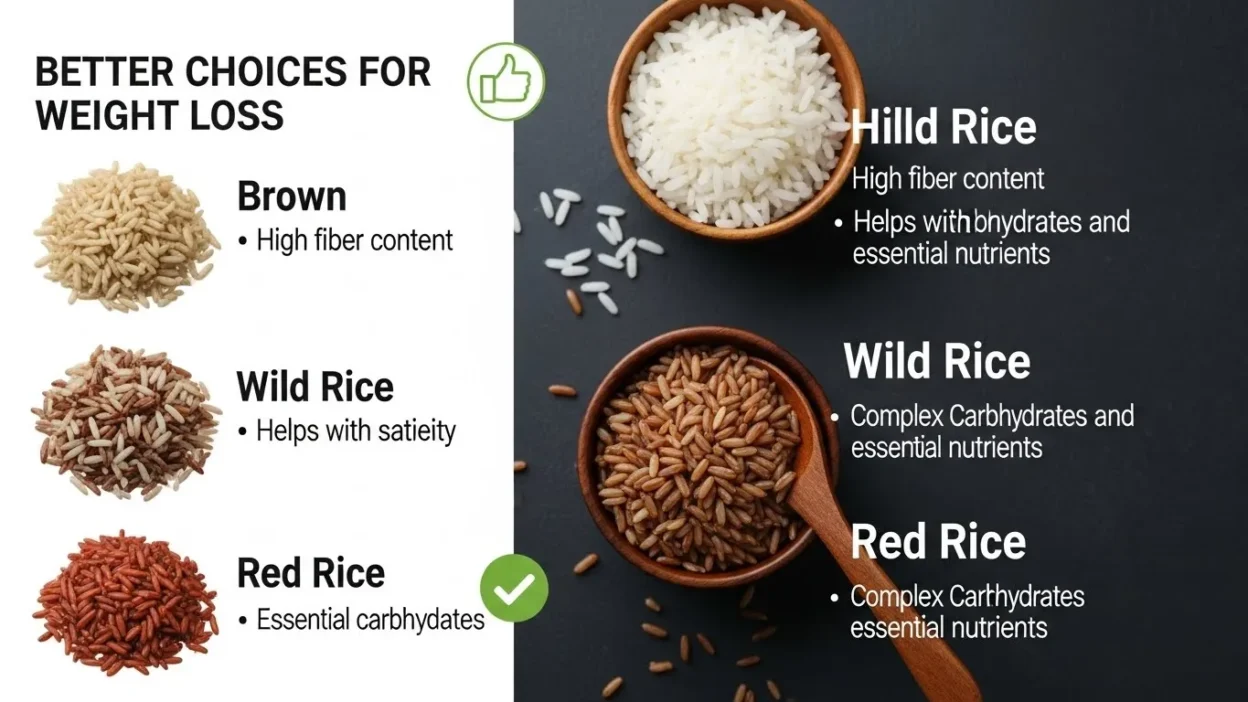
Wild rice and black rice are other nutritious options, offering more antioxidants and fiber than white rice. While rice is carb-heavy, pairing it with protein and vegetables can balance meals, increase satiety, and support fat loss. Ultimately, the nutritional value of rice varies by type, but when portioned wisely, it can be a healthy addition to a weight-loss-friendly diet.
How Rice Affects Weight Loss
Rice often gets a bad reputation in weight-loss discussions, but its impact depends on portion size, type, and how it’s incorporated into meals. At its core, rice is a carbohydrate-rich food, providing energy for daily activities and workouts. Carbohydrates are essential for fueling the body, but overeating high-carb foods can contribute to excess calorie intake, which may lead to weight gain.
One key factor is the glycemic index (GI). White rice has a high GI, meaning it can cause rapid spikes in blood sugar and insulin levels. Frequent spikes may increase hunger and cravings, potentially leading to overeating. Brown rice, wild rice, and black rice have a lower GI due to their higher fiber content, allowing for slower digestion and more stable blood sugar levels. This slower energy release helps you feel fuller for longer, reducing the temptation to snack between meals.
Portion control is also critical. A standard serving of cooked rice is about ½ to 1 cup. Pairing rice with protein (like chicken, fish, or tofu) and non-starchy vegetables increases satiety, balances macronutrients, and helps manage calorie intake. Timing matters too—consuming rice earlier in the day or around workouts can provide energy while minimizing storage of excess carbs as fat.
In short, rice does not automatically hinder weight loss. Choosing high-fiber varieties, managing portions, and pairing rice with other nutrient-dense foods can make it a supportive part of a weight-loss diet.
White Rice vs. Brown Rice: Which is Better?
When it comes to weight loss, not all rice is created equal. The two most commonly consumed types—white rice and brown rice—have distinct nutritional differences that affect how they influence your body.
White rice is milled and polished, which removes the bran and germ layers. This process gives it a soft texture and longer shelf life but strips away most of its fiber, vitamins, and minerals. A cup of cooked white rice contains about 205 calories, 45 grams of carbohydrates, and less than 1 gram of fiber. Because it digests quickly, white rice has a higher glycemic index (GI), which can cause rapid spikes in blood sugar and insulin. For some people, frequent consumption of high-GI foods may lead to increased hunger and overeating.
Brown rice, on the other hand, is a whole grain that retains the bran and germ. This makes it richer in fiber, vitamins, and minerals like magnesium, phosphorus, and B vitamins. A cup of cooked brown rice has slightly more calories (about 215) but contains 3–4 grams of fiber, which slows digestion, stabilizes blood sugar, and promotes satiety. Its lower GI makes it a better option for sustained energy and appetite control, key factors in weight management.
For weight-loss goals, brown rice is generally the preferred choice due to its higher fiber content and nutrient density. That said, white rice can still fit into a diet if portions are controlled and it’s paired with protein and vegetables. Alternating between rice types can also provide variety while supporting healthy weight loss.
Rice in Diet Plans
Rice can be successfully incorporated into a variety of diet plans aimed at weight loss, as long as portions and preparation methods are carefully managed. In a balanced diet, rice serves as a healthy carbohydrate source that fuels energy and supports metabolism. Pairing rice with lean proteins, such as chicken, fish, tofu, or legumes, and plenty of vegetables can create meals that are satisfying, nutrient-dense, and calorie-conscious.
For those following low-carb or ketogenic diets, rice is typically limited due to its high carbohydrate content. However, small portions of low-GI rice, like brown rice or wild rice, can occasionally be included, especially around workouts, when the body requires more glucose for energy. Mediterranean-style diets, which emphasize whole grains, vegetables, and healthy fats, often include moderate servings of rice, especially brown or red rice, as part of balanced meals.
Portion control is critical for weight loss. A standard serving of cooked rice ranges from ½ to 1 cup. Larger portions can significantly increase calorie intake, potentially hindering fat loss. Using rice as a side dish rather than the main focus of the meal can help manage total calories while still enjoying its taste and nutritional benefits.
Sample meal ideas include: brown rice with grilled salmon and steamed broccoli for lunch, a small portion of white rice with stir-fried vegetables and tofu for dinner, or a breakfast rice bowl with fruit and a sprinkle of nuts. By strategically including rice in your diet plan, you can enjoy it without compromising your weight-loss goals.
Cooking Tips for Weight-Loss-Friendly Rice
How rice is prepared can make a big difference when it comes to weight loss. Even the healthiest rice variety can contribute to excess calories if cooked with too much oil, butter, or sugar. Using simple, low-calorie cooking methods ensures rice remains a healthy addition to your diet. Steaming or boiling rice without added fats is the most weight-loss-friendly approach. These methods preserve nutrients while keeping calorie counts low.
Another effective tip is cooling rice after cooking. When cooked rice is cooled and then consumed later, it forms “resistant starch,” a type of carbohydrate that resists digestion. Resistant starch can help you feel fuller for longer and may improve gut health, potentially supporting weight management. Reheating cooled rice does not destroy these benefits.
Portioning rice before cooking or serving is essential. Use a measuring cup to stick to the recommended ½ to 1 cup per meal. Adding fiber and protein to rice meals, such as vegetables, beans, eggs, or lean meats, further slows digestion and boosts satiety.
Flavoring rice doesn’t have to add extra calories. Use herbs, spices, garlic, ginger, or low-sodium soy sauce to enhance taste without unhealthy fats. Avoid heavy sauces, excessive oils, or sugary additives that can turn a simple rice dish into a calorie-heavy meal.
By following these simple cooking tips, rice can remain a versatile, nutritious, and weight-loss-friendly food that fits seamlessly into a healthy diet. With mindful preparation and pairing, you can enjoy rice without compromising your goals.
Common Myths About Rice and Weight Gain
Rice is often misunderstood in the context of weight loss, leading to several persistent myths. One common misconception is that “all rice makes you fat.” In reality, rice itself does not cause weight gain. Like any food, it only contributes to fat accumulation when consumed in excess calories. Portion size and overall diet quality are far more important than simply eliminating rice.
Another widespread myth is that “white rice is unhealthy and should be avoided entirely.” While it’s true that white rice has less fiber and nutrients than brown rice, it can still fit into a balanced diet if eaten in moderation. Pairing white rice with protein and vegetables can help manage blood sugar levels and keep meals satisfying.
Some believe that “brown rice alone will help you lose weight.” While brown rice’s higher fiber content does promote satiety and can support weight management, no single food guarantees fat loss. Weight loss is achieved through a combination of balanced nutrition, portion control, and regular physical activity.
Additionally, many people think that “rice causes belly fat.” Fat accumulation in the abdominal area is influenced by overall calorie intake, lifestyle, and genetics—not by a specific food.
By debunking these myths, it becomes clear that rice is not inherently bad for weight loss. Choosing the right type of rice, controlling portions, and pairing it with nutrient-dense foods can make it a valuable and satisfying component of a weight-loss-friendly diet.
FAQs
1. Can I eat rice every day and still lose weight?
Yes, you can. Rice can be part of a weight-loss plan if portions are controlled and it is balanced with protein, vegetables, and healthy fats. Choosing high-fiber rice like brown, black, or wild rice is especially beneficial.
2. Is white rice worse than brown rice for weight loss?
White rice has a higher glycemic index and less fiber, which may lead to quicker hunger and blood sugar spikes. Brown rice digests more slowly, keeps you fuller longer, and provides more nutrients, making it generally better for weight management.
3. How much rice should I eat per meal?
A standard serving is about ½ to 1 cup of cooked rice. Adjust based on your activity level, overall calorie needs, and diet goals. Pair rice with protein and vegetables to create balanced, satisfying meals.
4. Can rice cause belly fat?
Rice alone does not cause belly fat. Weight gain is influenced by total calorie intake, lifestyle, and genetics. Eating rice in moderation as part of a balanced diet does not inherently lead to fat accumulation.
5. Are there weight-loss-friendly rice alternatives?
Yes. Options like cauliflower rice, quinoa, barley, and shirataki rice are lower in calories or carbs and higher in fiber, making them excellent substitutes for traditional rice in meals.
6. Can rice help provide energy for workouts?
Absolutely. Rice is a good carbohydrate source, providing quick energy for physical activity. Eating rice before workouts can fuel performance without hindering weight-loss goals if portions are controlled.
Conclusion
Rice often gets an unfair reputation in weight-loss discussions, but the truth is that it can be part of a healthy, slimming diet when chosen and prepared wisely.
The type of rice matters brown, black, and wild rice offer more fiber, nutrients, and a lower glycemic index compared to white rice, helping to keep you fuller for longer and stabilize blood sugar levels.
Portion control is essential, as overeating any carbohydrate-rich food can hinder weight-loss efforts.
Pairing rice with lean proteins, vegetables, and healthy fats maximizes satiety and nutrient balance. Cooking methods, such as steaming or boiling, and avoiding high-calorie sauces, also make a difference.
Ultimately, rice itself is not the enemy; rather, how it is incorporated into your diet determines its effect on weight. By making mindful choices, rice can remain a satisfying, nutritious, and versatile part of your weight-loss journey.

James Patterson is a bestselling author known for his thrilling storytelling, unforgettable characters, and page-turning mysteries. His work has inspired readers across the world with stories full of suspense, love, and emotion. At Talk2Flirt.com, we highlight his creative spark — showing how passion, words, and imagination can connect hearts just like the perfect conversation.