
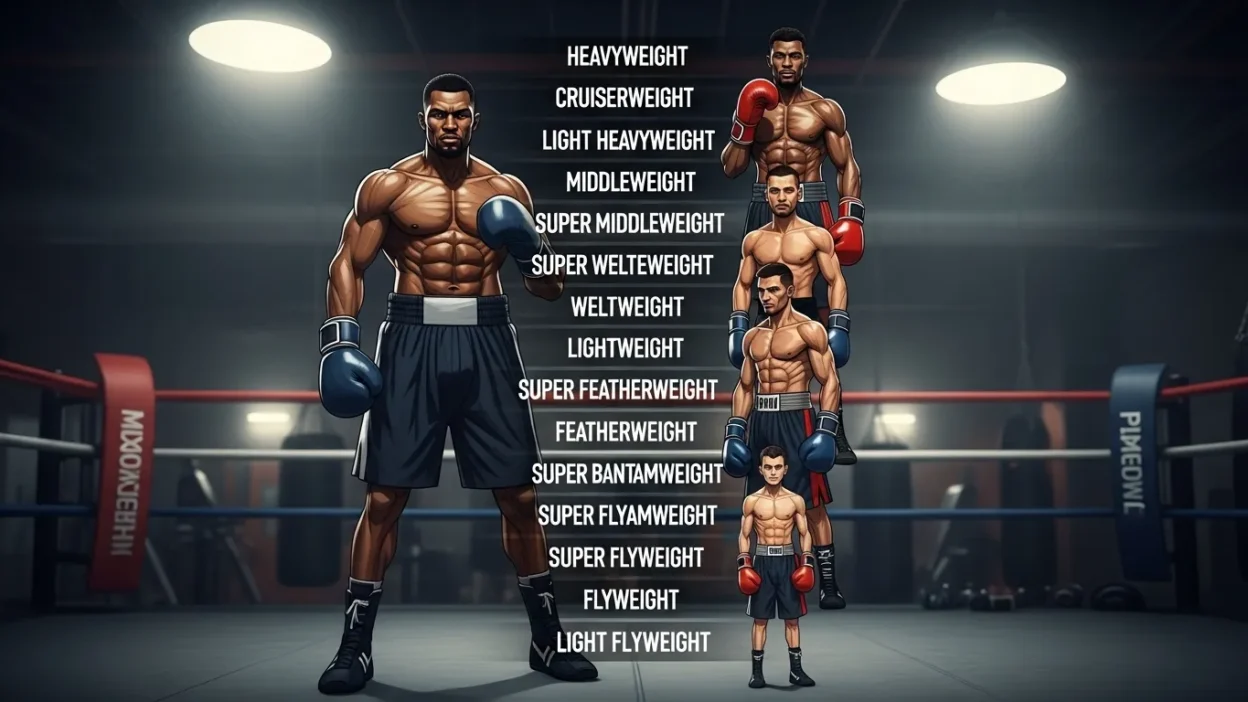
Boxing is one of the few sports where size and weight can significantly influence performance, power, and safety. To ensure fair competition and protect athletes, boxing uses a system of weight classes, dividing fighters into categories based on their body weight.
From the lightest divisions like minimumweight and flyweight to the heavyweights who pack immense power, each class is designed to create a level playing field. Understanding boxing weight classes is essential not just for aspiring boxers, but also for fans who want to appreciate the sport at a deeper level.
In this guide, we will explore every professional and amateur boxing division, explain weight limits in pounds and kilograms, highlight key differences between governing bodies, and discuss how weight impacts fighting style, strategy, and even health.
If you are a beginner, a sports enthusiast, or someone looking to step into the ring, this complete guide to weight classes in boxing has everything you need to know.
History of Weight Classes in Boxing
Boxing has a long and storied history, dating back hundreds of years, but in its early days, there were no formal weight divisions. Fighters of all sizes often competed against each other, which led to dangerous mismatches. Heavier opponents naturally had advantages in power and reach, while lighter fighters struggled to compete, making bouts unfair and sometimes life-threatening. As the sport grew in popularity during the 19th century, the need for a system to ensure safety and fairness became clear.
The first formal weight classes emerged in the late 1800s, initially with only a handful of divisions, such as lightweight, middleweight, and heavyweight. These early classes helped standardize competition and encouraged more fighters to participate, knowing they would face opponents of similar size. Over time, additional divisions were introduced to bridge the gaps between existing classes. By the mid-20th century, the modern professional structure of 17 recognized weight classes was established, ranging from minimumweight to heavyweight.
Amateur boxing also adopted weight divisions, often with fewer categories, to ensure safety in tournaments such as the Olympics. Today, weight classes are recognized worldwide by major governing bodies like the WBA, WBC, IBF, and WBO, providing a consistent framework for fighters and fans alike. This historical evolution not only improved safety but also enhanced the strategic and competitive nature of boxing, shaping the sport into what it is today.
Why Weight Classes Exist in Boxing
Weight classes are one of the most important aspects of boxing, and their existence goes beyond simple categorization. The primary purpose is safety. Boxing involves high-impact punches, and even a small difference in size and weight can result in serious injuries. By dividing fighters into specific weight ranges, the sport ensures that competitors face opponents of similar physical stature, minimizing the risk of injury and making matches fairer.
Another key reason for weight classes is fair competition. Size often translates into strength and reach advantages, giving heavier fighters a natural edge. Without divisions, lighter fighters would be at a consistent disadvantage, making it difficult for skill, strategy, and technique to determine the outcome. Weight classes level the playing field, allowing technique, speed, and tactical ability to shine, rather than just brute force.
Weight divisions also add strategic depth to boxing. Fighters often choose divisions based on their natural body weight, fighting style, and career goals. Moving up or down in weight can offer opportunities to win multiple titles, face different opponents, or adapt to changes in their body over time. Moreover, these divisions create a structured system for championships, rankings, and records, making the sport more organized for promoters, fans, and athletes alike.
In short, weight classes exist to protect fighters, ensure fairness, and maintain the integrity of the sport, forming the foundation upon which modern boxing thrives.
How Boxing Weight Classes Are Measured
Boxing weight classes are strictly enforced through official weigh-ins, which determine whether a fighter qualifies for a particular division. A fighter must meet the maximum weight limit of their division at the designated weigh-in, typically conducted the day before the fight in professional boxing. In amateur and Olympic boxing, weigh-ins often occur on the same day as the match, which adds an extra challenge for athletes managing their weight.
Weight is measured using certified scales, which are calibrated for accuracy to ensure fairness. Fighters are usually weighed without shoes and wearing minimal clothing to prevent any discrepancies. If a boxer exceeds the weight limit, they may be given a short period to shed the excess weight. Failure to make weight can lead to penalties, cancellation of the fight, or reclassification into a different division.
Boxers often maintain a “walking weight” that is slightly higher than their fight weight. Before the weigh-in, many fighters practice weight cutting, losing water weight through diet, dehydration, and exercise. After the weigh-in, they rehydrate to regain strength before entering the ring. While this practice is common, it carries risks, such as dehydration, reduced performance, and health complications if not done carefully.
Boxing weight classes are measured in both pounds (lbs) and kilograms (kg) to standardize divisions worldwide. Each division has a clearly defined upper limit, ensuring fighters compete on a level playing field. Accurate measurement is essential for fairness, safety, and maintaining the integrity of the sport.
Complete List of Professional Boxing Weight Classes
Professional boxing is divided into 17 official weight classes, each designed to ensure fair competition between fighters of similar size. Understanding these divisions is essential for fans, aspiring boxers, and anyone following the sport. Here’s a detailed breakdown:
- Minimumweight (Strawweight): Up to 105 lbs (47.6 kg). The lightest division, known for speed and endurance.
- Light Flyweight: 105–108 lbs (47.6–49 kg). Quick, agile fighters dominate this class.
- Flyweight: 108–112 lbs (49–50.8 kg). Known for fast combinations and high-volume punching.
- Super Flyweight: 112–115 lbs (50.8–52.2 kg). Slightly heavier, maintaining speed with added power.
- Bantamweight: 115–118 lbs (52.2–53.5 kg). Fighters often balance speed and technical skill.
- Super Bantamweight: 118–122 lbs (53.5–55.3 kg). Bridges bantamweight and featherweight, offering more power.
- Featherweight: 122–126 lbs (55.3–57.2 kg). Known for tactical bouts with fast footwork.
- Super Featherweight: 126–130 lbs (57.2–59 kg). Slightly heavier, often combining speed with increased punching power.
The remaining heavier divisions include Lightweight, Super Lightweight, Welterweight, Super Welterweight, Middleweight, Super Middleweight, Light Heavyweight, Cruiserweight, and Heavyweight, with heavyweights having no upper limit.
Each class is defined by strict weight limits, measured in both pounds and kilograms. Fighters typically choose divisions based on their natural body weight, style, and strategic goals. These classes not only ensure safety and fairness but also allow boxers to compete for multiple titles across divisions, creating exciting matchups and a rich history of multi-division champions.
Boxing Weight Classes Chart (Quick Reference)
For a quick and easy understanding of boxing divisions, a weight class chart is essential. This allows fans, trainers, and fighters to quickly reference weight limits and compare divisions. The following chart includes all professional boxing weight classes, along with their limits in pounds (lbs) and kilograms (kg):
| Division | Max Weight (lbs) | Max Weight (kg) |
|---|---|---|
| Minimumweight (Strawweight) | 105 | 47.6 |
| Light Flyweight | 108 | 49 |
| Flyweight | 112 | 50.8 |
| Super Flyweight | 115 | 52.2 |
| Bantamweight | 118 | 53.5 |
| Super Bantamweight | 122 | 55.3 |
| Featherweight | 126 | 57.2 |
| Super Featherweight | 130 | 59 |
| Lightweight | 135 | 61.2 |
| Super Lightweight | 140 | 63.5 |
| Welterweight | 147 | 66.7 |
| Super Welterweight | 154 | 69.9 |
| Middleweight | 160 | 72.6 |
| Super Middleweight | 168 | 76.2 |
| Light Heavyweight | 175 | 79.4 |
| Cruiserweight | 200 | 90.7 |
| Heavyweight | No Limit | No Limit |
This chart provides a visual snapshot of the divisions, making it easier to understand the progression from the lightest to the heaviest classes. It’s particularly useful for identifying where fighters fall in their natural weight, comparing divisions for potential matchups, and understanding the structure of professional boxing.
Having a clear chart also helps fans follow title fights, rankings, and champions across all divisions, emphasizing why weight classes are a critical part of the sport’s organization and fairness.
Amateur vs Professional Boxing Weight Classes
While professional boxing features 17 recognized weight classes, amateur boxing, including Olympic competitions, has fewer divisions, designed to prioritize safety and accessibility for a broader range of athletes. Amateur boxing emphasizes skill, technique, and controlled competition rather than the commercial aspects of the sport, which influences how weight classes are structured.
In amateur boxing, weight divisions are slightly different and often have smaller gaps between classes. For example, the International Boxing Association (IBA) currently recognizes 13 weight categories for men and 12 for women in major tournaments. This allows athletes to compete against opponents of nearly identical size, reducing injury risk and encouraging fair play. Women’s divisions are adjusted for average body weight differences and are becoming increasingly standardized worldwide.
Another key difference is the timing of weigh-ins. In amateur boxing, fighters are usually weighed on the same day as the competition, unlike professional boxing, where weigh-ins occur the day before. This rule limits extreme weight-cutting strategies and encourages fighters to maintain a healthier, closer-to-natural weight.
Equipment differences also exist. Amateur fighters often wear headgear and compete with shorter rounds, making weight management slightly less extreme than in the professional ranks. Despite fewer divisions, amateur boxing still provides a clear pathway for athletes to progress to professional status, where they may choose a division based on career strategy, natural weight, and style.
Understanding these differences helps fans, coaches, and athletes appreciate the variations in competition and why weight classes remain critical at all levels of the sport.
Boxing Governing Bodies and Weight Class Recognition
Professional boxing is regulated by several major sanctioning organizations, each of which recognizes official weight classes and awards championship titles. The four most prominent governing bodies are the World Boxing Association (WBA), World Boxing Council (WBC), International Boxing Federation (IBF), and World Boxing Organization (WBO). These organizations set the rules for weight limits, title fights, and rankings, ensuring consistency across the sport worldwide.
Each governing body recognizes the standard 17 professional weight classes, from minimumweight to heavyweight, though occasionally there are slight differences in naming or rules. For example, some organizations may recognize “super” or “interim” titles within a division, which can create confusion for fans but allows for additional championship opportunities. Titles awarded by these bodies hold significant prestige, and fighters often aim to unify belts by holding championships from multiple organizations in the same division.
Beyond the major bodies, regional and national organizations also sanction fights and maintain rankings, contributing to a layered and structured boxing system. These smaller organizations typically follow the same weight limits but may have additional rules or minor variations in how fights are sanctioned.
Recognition of weight classes by these bodies is essential for fighter safety, fairness, and career planning. It ensures that boxers compete within clearly defined limits and prevents mismatches. Fans and promoters rely on these standards to organize events, maintain rankings, and build the sport’s credibility. Without governing bodies, professional boxing would lack structure, consistency, and legitimacy.
Weight Cutting in Boxing
Weight cutting is a common practice in boxing, where fighters temporarily reduce their body weight to qualify for a specific division. This allows them to compete against lighter opponents while regaining strength and size before the fight. While effective when done correctly, weight cutting carries significant risks and requires careful planning.
Most weight cutting strategies involve reducing water weight through methods like sweating in saunas, wearing sweat suits, or limiting fluid intake. Fighters may also follow strict low-calorie diets in the days leading up to the weigh-in. After successfully making weight, they rehydrate and replenish nutrients to return close to their natural “walking weight” by fight time. Some boxers can regain 10–15 pounds (4–7 kg) in less than 24 hours, giving them a physical advantage in the ring.
Despite its strategic benefits, extreme weight cutting can be dangerous. Rapid dehydration and electrolyte loss can lead to dizziness, impaired performance, kidney damage, and, in severe cases, life-threatening conditions. Boxing commissions and governing bodies have introduced rules and limits to reduce extreme weight-cutting practices, such as same-day weigh-ins in amateur competitions and hydration tests in professional bouts.
Understanding weight cutting is essential for fans and athletes alike. While it is a tool for gaining a competitive edge, it emphasizes the importance of balance, safety, and discipline in boxing. Fighters must manage weight carefully to maximize performance without compromising health, highlighting the critical role weight classes play in maintaining fairness and safety in the sport.
(FAQs)
1. How many weight classes are there in boxing?
Professional boxing recognizes 17 official weight classes, ranging from minimumweight (105 lbs / 47.6 kg) to heavyweight, which has no upper limit. Amateur boxing typically has fewer divisions.
2. What is the lightest weight class in boxing?
The lightest professional division is Minimumweight, also called Strawweight, with a maximum limit of 105 lbs (47.6 kg).
3. What is the heaviest weight class in boxing?
The Heavyweight division is the heaviest, and it has no upper weight limit. Fighters in this class can weigh over 250 lbs (113 kg) or more.
4. Can boxers fight outside their weight class?
Yes, but it’s called a catchweight fight, and both fighters must agree on a specific weight. Competing outside your natural division can create advantages or risks.
5. Why are there “super” divisions in boxing?
“Super” or “junior” divisions were introduced to bridge gaps between existing weight classes, allowing fighters to compete more evenly and create additional title opportunities.
6. What happens if a boxer fails to make weight?
If a fighter exceeds the division limit, they may be given a short time to cut weight. Failure can result in fight cancellation, fines, or moving the bout to a catchweight.
7. Are boxing weight classes the same worldwide?
Yes, professional divisions are largely standardized by major organizations like WBA, WBC, IBF, and WBO, though naming and minor rules can vary slightly.
8. Why do fighters cut weight before a fight?
Weight cutting gives a potential size and strength advantage, allowing a fighter to enter the ring heavier than the division limit while still qualifying at weigh-in.
Conclusion
Weight classes are the backbone of boxing, ensuring that fighters compete on a level playing field where skill, technique, and strategy matter more than sheer size or power.
From the lightest divisions like minimumweight to the giants of heavyweight, each class is carefully defined with strict weight limits, measured in both pounds and kilograms. These divisions exist not only to maintain fairness and competitive balance, but also to protect the health and safety of athletes.
Understanding weight classes also adds a deeper appreciation for the sport. Fans can better follow matchups, track champions across divisions, and understand the challenges fighters face when moving between weight classes or cutting weight for a bout.
Governing bodies like the WBA, WBC, IBF, and WBO standardize these divisions worldwide, ensuring consistency and credibility in professional boxing.
Whether you are a beginner learning about boxing, an aspiring fighter, or a devoted fan, knowing the structure and purpose of weight classes enhances your knowledge of the sport. Ultimately, weight classes are more than numbers on a scale they are a critical system that keeps boxing competitive, exciting, and safe for everyone involved.

I’m a passionate writer at Talk2Flirt.com, dedicated to creating fun, flirty, and engaging content that helps people connect, laugh, and keep the conversation flowing.