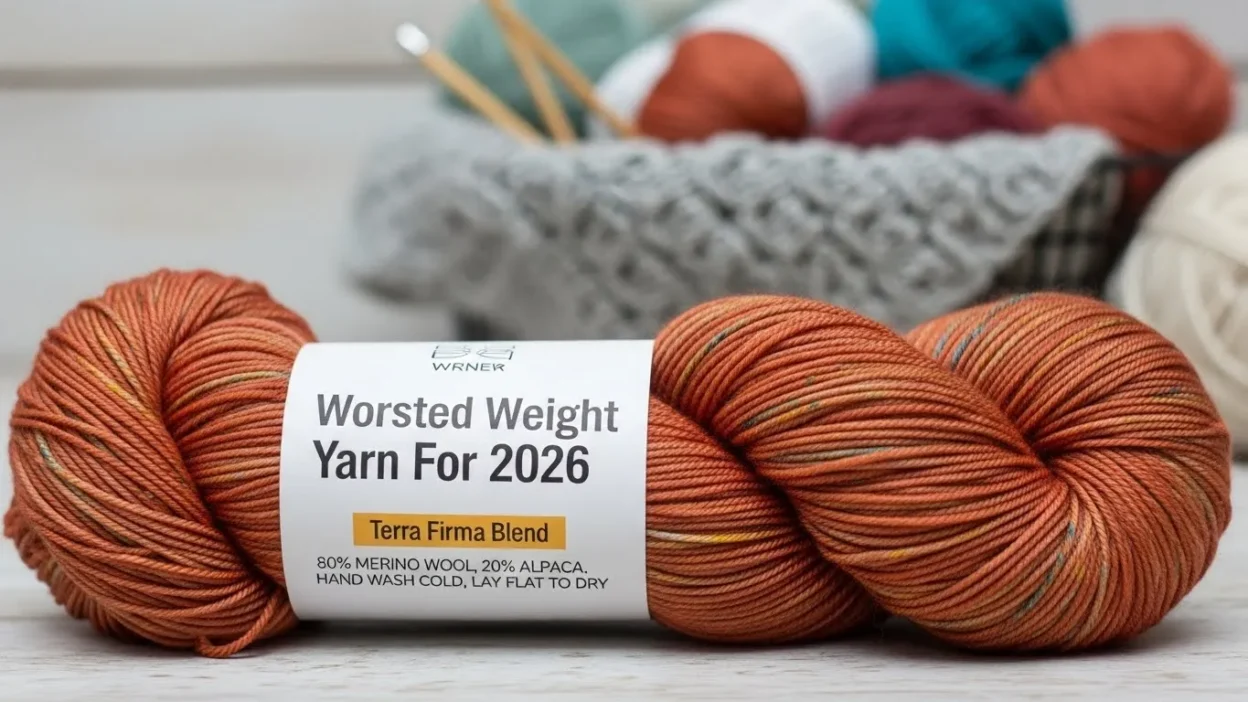
If you’re new to knitting or crochet, you’ve probably seen the term worsted weight yarn on yarn labels and wondered what it actually means.
Worsted weight yarn is one of the most popular and widely used yarn types in the world, making it a favorite choice for both beginners and experienced crafters.
Despite its name, worsted weight yarn has nothing to do with how heavy the yarn feels.
Instead, it refers to the yarn’s thickness and how it fits into the standard yarn weight classification system. Known as a medium-weight or Category 4 yarn, worsted weight strikes the perfect balance between durability and flexibility.
It’s thick enough to work up quickly, yet thin enough to create detailed stitches. From cozy sweaters and warm blankets to scarves, hats, and home décor, worsted weight yarn is incredibly versatile.
In this guide, you’ll learn exactly what worsted weight yarn is, how it’s used, and why it’s a staple in yarn crafts.
What Does Worsted Weight Yarn Mean?
Worsted weight yarn refers to a specific thickness category within the standard yarn weight system, not the physical heaviness of the yarn. Many beginners assume the word “weight” means how heavy the yarn feels in your hand, but in yarn terms, weight describes thickness. Worsted weight yarn is classified as a medium-weight yarn, officially labeled as Category 4 by the Craft Yarn Council. This makes it thicker than DK (light weight) yarn but thinner than bulky yarn, placing it right in the middle of the yarn spectrum.
The term “worsted” originally comes from a method of spinning fibers rather than a yarn size. Worsted-spun yarns are made by aligning fibers smoothly, creating a strong, even, and durable strand. Over time, the term became associated with this medium yarn thickness because many yarns of this size were spun using the worsted method. Today, the name remains even though not all worsted weight yarns are spun in the same way.
Worsted weight yarn is known for its balanced structure, which provides excellent stitch definition. This makes it ideal for both simple and textured stitch patterns. Whether you’re knitting or crocheting, stitches are easy to see, count, and correct. Because of this reliability, worsted weight yarn is often recommended for learning new techniques and following patterns accurately.
Where Does Worsted Weight Yarn Fall in Yarn Weights?
Understanding where worsted weight yarn fits in the spectrum of yarn weights is key for selecting the right yarn for your projects. Yarn weight ranges from the very fine lace yarns to the thick, chunky or super bulky types, and each weight category affects the drape, texture, and overall appearance of your finished piece. Worsted weight yarn is classified as Category 4 – Medium, placing it right in the middle of this spectrum.
Here’s a quick comparison: lace yarn and fingering yarn (Category 0–1) are very fine and ideal for delicate items like shawls or baby clothes. Sport and DK yarns (Category 2–3) are slightly thicker and used for lightweight garments. Worsted weight (Category 4) provides a balance—it’s thick enough to create warm, substantial fabrics but still flexible for detailed stitch work. Above it are aran and bulky yarns (Category 5–6), which are heavier and work well for quick, thick projects like heavy blankets or chunky scarves.
The versatility of worsted weight yarn is one of the reasons it’s so popular. It can accommodate a wide range of patterns, from sweaters and hats to home décor and accessories. Most patterns for beginners and intermediate crafters are designed with worsted weight yarn in mind. By understanding its position in the yarn weight chart, you can confidently choose substitutions if needed, ensuring your projects maintain the correct size, texture, and appearance.
Worsted Weight Yarn Thickness & Gauge
Worsted weight yarn has a medium thickness, which makes it extremely versatile for a wide range of knitting and crochet projects. One of the key ways to measure yarn thickness is through wraps per inch (WPI), which counts how many times the yarn can be wrapped around a ruler in one inch. For worsted weight yarn, the WPI typically ranges from 9 to 12 wraps per inch. This measurement helps crafters compare yarns, even if they are made from different fibers, ensuring consistent project results.
Gauge is another essential concept when working with worsted weight yarn. Gauge refers to the number of stitches and rows per inch, which determines the size and density of the finished fabric. For knitting, a standard worsted weight gauge is 16–20 stitches per 4 inches using US size 7–9 (4.5–5.5 mm) needles, while for crochet, the typical gauge is 11–14 stitches per 4 inches with a 5.5–6.5 mm hook. Keep in mind that the exact gauge can vary depending on your tension, fiber type, and stitch pattern.
The balanced thickness of worsted weight yarn provides excellent stitch definition, making it perfect for textured patterns such as cables, ribbing, and lacework. It also offers enough substance to keep projects warm and durable without being bulky. Whether you’re knitting a sweater, crocheting a blanket, or making accessories, understanding the thickness and gauge of worsted weight yarn is crucial for achieving accurate results and a polished finished piece.
Needle & Hook Sizes for Worsted Weight Yarn
Choosing the right needle or hook size is crucial for working with worsted weight yarn. The size you select affects gauge, stitch definition, drape, and overall project outcome. While worsted weight yarn is very forgiving, using the recommended tools ensures your finished item matches the pattern’s intended size and texture.
For knitting, the typical needle size for worsted weight yarn ranges from US 7 to 9 (4.5–5.5 mm). Smaller needles will create a tighter, denser fabric, ideal for structured garments or items that need durability, like bags or rugs. Larger needles produce a looser, softer fabric, which is perfect for drapey sweaters, scarves, or blankets. Always knit a gauge swatch before starting your project to verify that your tension matches the pattern’s specifications. This step prevents sizing issues and ensures the project will fit as intended.
For crochet, worsted weight yarn typically works best with hooks ranging from US I-9 to K-10.5 (5.5–6.5 mm). As with knitting, a smaller hook produces tighter stitches, while a larger hook creates a more open and flexible fabric. Beginners often find crochet with worsted weight yarn easier because the medium thickness makes stitches easier to see and count, reducing mistakes and frustration.
It’s also important to note that fiber type affects hook and needle selection. For example, slippery yarns like silk or bamboo may require slightly smaller tools to prevent stitches from stretching, while fluffy acrylics may need larger tools for smooth movement. By choosing the right needles or hooks, you can take full advantage of worsted weight yarn’s versatility and achieve professional-looking results.
Types of Fibers in Worsted Weight Yarn
Worsted weight yarn is available in a variety of fiber types, each offering unique characteristics that affect the look, feel, and performance of your project. Choosing the right fiber depends on the type of item you are making, your personal preferences, and care considerations.
1. Wool Worsted Weight Yarn: Wool is one of the most popular fibers for worsted weight yarn. It provides warmth, elasticity, and excellent stitch definition, making it ideal for sweaters, hats, and scarves. Wool can also “bloom” or soften after washing, giving your projects a professional finish. Merino wool, in particular, is soft and comfortable against the skin, while traditional wool offers more durability.
2. Acrylic Worsted Weight Yarn: Acrylic yarn is affordable, widely available, and easy to care for. It is machine washable, lightweight, and comes in a vast array of colors. Acrylic yarn is ideal for blankets, home décor, and projects for kids or pets, though it may not provide the same warmth or breathability as natural fibers.
3. Cotton Worsted Weight Yarn: Cotton yarn is smooth, breathable, and excellent for summer garments, dishcloths, and bags. Cotton is less elastic than wool, so projects may require a slightly tighter gauge to maintain shape.
4. Blended Fibers: Many worsted weight yarns combine fibers, such as wool-acrylic or cotton-acrylic blends. Blends aim to combine the best qualities of each fiber—for example, wool for warmth and elasticity, acrylic for durability and easy care.
Understanding fiber types helps crafters select the best yarn for their projects and ensures that the finished piece looks, feels, and performs as intended. Each fiber type interacts differently with needles, hooks, and patterns, making fiber choice an essential step in any project.
Common Uses of Worsted Weight Yarn
Worsted weight yarn is one of the most versatile yarn types, making it a favorite choice for a wide variety of projects. Its medium thickness and excellent stitch definition allow it to work well for garments, accessories, home décor, and more.
1. Sweaters and Cardigans: Worsted weight yarn is ideal for creating warm, durable sweaters and cardigans. Its medium thickness provides structure without being too bulky, and the excellent stitch definition highlights patterns such as cables, ribbing, or lace designs.
2. Scarves, Hats, and Mittens: Accessories like scarves, hats, and mittens benefit from the balance worsted yarn offers. It knits or crochets quickly, keeping you warm without creating a garment that feels overly heavy or tight. The stitch patterns are easy to see, which is especially helpful for beginners or for intricate designs.
3. Blankets and Afghans: For home décor, worsted weight yarn is a top choice. It creates blankets and afghans that are cozy, durable, and flexible, making them perfect for layering or gifting. Its medium weight ensures the finished piece isn’t too heavy to handle but still provides warmth.
4. Baby Items: Worsted weight yarn is commonly used for baby sweaters, booties, and hats. Soft fibers like merino wool or acrylic blends make it gentle against a baby’s skin while maintaining durability for frequent washing.
5. Other Projects: This yarn is also suitable for bags, cushions, stuffed toys, and seasonal decorations. Its versatility, availability, and wide range of colors make it easy to match the yarn to almost any pattern or project.
Because of its adaptability, worsted weight yarn is often recommended for both beginners and experienced crafters. It’s a reliable choice for projects that require balance between warmth, structure, and stitch visibility.
Worsted Weight Yarn vs Other Yarn Weights
Worsted weight yarn is classified as medium-weight yarn (Category 4), but understanding how it compares to other yarn weights helps crafters make the right choice for their projects. Its balanced thickness makes it more versatile than lighter or heavier yarns, but each category has unique characteristics.
1. Worsted Weight vs DK Yarn: DK (double knitting) yarn is slightly thinner than worsted weight, classified as Category 3 – Light. DK yarn is ideal for lightweight garments, delicate stitch patterns, or projects requiring finer detail. If you substitute worsted weight for DK, your project may end up thicker, warmer, or slightly smaller unless you adjust your needle or hook size.
2. Worsted Weight vs Aran Yarn: Aran yarn is similar to worsted but slightly thicker and denser, often used for traditional cable-knit sweaters and heavy accessories. While worsted weight can sometimes substitute for aran, it may produce a lighter, softer fabric. Patterns designed specifically for aran yarn may require gauge adjustments when using worsted yarn.
3. Worsted Weight vs Bulky Yarn: Bulky yarn is much thicker (Category 5) and works up quickly. It’s perfect for chunky blankets, scarves, or hats. Using worsted weight instead of bulky yarn will require more stitches and rows, resulting in a finer, lighter fabric.
4. Worsted Weight vs Light or Lace Yarns: Lighter yarns (sport, fingering, or lace) produce delicate, airy fabrics. Substituting worsted yarn would make the project much denser and could distort patterns designed for fine yarns.
Understanding these differences helps crafters select the right yarn for the desired drape, warmth, and texture. Worsted weight’s versatility makes it a go-to choice for a wide range of projects, bridging the gap between light and heavy yarns while maintaining excellent stitch definition.
Can You Substitute Worsted Weight Yarn?
Substituting worsted weight yarn for another yarn type is possible, but it requires careful consideration of gauge, fiber, and project design. Because worsted weight is a medium-thickness yarn (Category 4), it sits between lighter yarns like DK and heavier yarns like bulky. This versatility allows it to replace certain yarns, but adjustments may be necessary to ensure the finished item fits and drapes correctly.
1. Substituting for Lighter Yarn: If a pattern calls for DK or sport weight yarn, using worsted weight yarn will create a thicker, denser fabric. This can affect the size, drape, and flexibility of the item. To compensate, you may need to use larger needles or hooks or reduce the number of stitches and rows to maintain the intended dimensions.
2. Substituting for Heavier Yarn: If the original pattern uses bulky or aran yarn, worsted weight yarn may result in a lighter, thinner fabric. You can adjust by using smaller needles or hooks and adding extra stitches or rows to match the pattern’s gauge and size.
3. Fiber Considerations: Different fibers behave differently. Wool worsted yarn may stretch slightly, acrylic maintains its shape, and cotton can feel stiffer. When substituting, consider how the fiber will affect the finished project.
4. Importance of Swatching: Always knit or crochet a test swatch before substituting. This allows you to check gauge, stitch definition, and drape. A well-measured swatch ensures that your substitution will produce a finished item that looks and fits as intended.
Substituting worsted weight yarn can expand your creative options, but success depends on careful adjustments and attention to gauge, fiber, and project requirements.
Popular Worsted Weight Yarn Brands
When choosing worsted weight yarn, the brand you select can greatly impact the quality, feel, and performance of your project. While many brands produce excellent worsted yarn, some are particularly popular among knitters and crocheters due to their consistency, color range, and fiber quality.
1. Red Heart Super Saver: This acrylic worsted weight yarn is a favorite for beginners and budget-conscious crafters. It is durable, machine washable, and comes in a wide variety of colors, making it ideal for blankets, hats, and scarves. Its affordability and availability in most craft stores make it a go-to choice for large projects.
2. Lion Brand Vanna’s Choice: A versatile acrylic yarn, this brand is soft, lightweight, and perfect for accessories and garments. It offers excellent stitch definition, making it suitable for textured patterns like cables or ribbing.
3. Caron Simply Soft: Known for its smooth texture and vibrant colors, Caron Simply Soft is 100% acrylic but feels soft against the skin, making it ideal for wearable items like sweaters and baby clothes.
4. Cascade 220 Wool: This 100% wool yarn is a premium option for those looking for durability, warmth, and natural fiber quality. It is widely used for garments, shawls, and accessories that require long-lasting performance and stitch clarity.
5. Bernat Super Value & Cotton Blends: Bernat produces a variety of worsted weight yarns suitable for home décor, baby items, and easy-care projects, including cotton and cotton-blend options.
Choosing the right brand depends on your project type, desired fiber, and budget. Whether you need affordable acrylic for beginners or premium wool for heirloom-quality items, these popular brands provide reliable worsted weight yarn options that cater to all skill levels and project needs.
How to Read Yarn Labels for Worsted Weight Yarn
Understanding yarn labels is essential for selecting the right worsted weight yarn and ensuring your project turns out as intended. Yarn labels provide information about weight, fiber content, care instructions, and recommended tools, all of which help crafters make informed decisions.
1. Yarn Weight: Labels indicate the yarn weight, often with a number and a category. Worsted weight yarn is usually marked as Category 4 – Medium. Some labels also include a symbol, such as a small skein icon with the number 4 inside. This helps you quickly identify the yarn’s thickness, even if you’re unfamiliar with the brand.
2. Fiber Content: The label lists the fiber type, such as wool, acrylic, cotton, or blends. Knowing the fiber is important because it affects stitch elasticity, warmth, softness, and care requirements. For instance, wool may need hand washing or gentle cycles, while acrylic is often machine washable.
3. Yardage and Skein Size: The label shows the total yardage/meters and weight/grams of the skein. This information helps you calculate how many skeins you’ll need for a project. Different brands may have skeins of the same weight but varying yardage, so always check before purchasing.
4. Recommended Needle and Hook Sizes: Labels suggest needle and hook sizes for knitting and crochet, giving guidance for achieving standard gauge. While these are recommendations, checking your personal gauge is always recommended.
5. Care Instructions and Dye Lot: Labels also include washing instructions, fiber care symbols, and the dye lot number, ensuring consistency in color across multiple skeins.
By carefully reading yarn labels, crafters can select the right worsted weight yarn, avoid mistakes, and achieve the best results in their knitting or crochet projects.
Care & Washing Tips for Worsted Weight Yarn
Proper care is essential to maintain the appearance, texture, and longevity of projects made with worsted weight yarn. The best care method depends largely on the fiber type, as wool, acrylic, cotton, and blends all behave differently.
1. Wool Worsted Weight Yarn: Wool is naturally elastic and warm but can shrink or felt if washed improperly. Hand washing in cool water with mild detergent is usually recommended. Avoid wringing or twisting the yarn; instead, gently squeeze out excess water and lay the item flat to dry. Some superwash wool varieties can be machine washed on a gentle cycle, but checking the yarn label is crucial.
2. Acrylic Worsted Weight Yarn: Acrylic yarn is generally machine washable and dryer-safe, making it low-maintenance and ideal for blankets, children’s clothing, and everyday items. However, to prevent pilling or stretching, washing in cool water on a gentle cycle and drying flat or on low heat is recommended.
3. Cotton and Cotton Blends: Cotton is less elastic than wool, so projects may stretch or sag over time. Wash cotton items in cool or warm water, reshape while damp, and lay flat to dry. Machine drying can cause shrinkage, so it’s best avoided.
4. Blended Fibers: For blends, follow the care instructions of the most delicate fiber in the mix. Always read the label and adjust washing and drying methods accordingly.
5. General Tips: Avoid using bleach, as it can damage fibers. Store finished projects in a cool, dry place to prevent mold, mildew, or insect damage. Regularly folding and rotating blankets or sweaters helps maintain shape and appearance.
Following proper care guidelines ensures your worsted weight yarn projects stay beautiful, soft, and durable for years to come.
Pros and Cons of Worsted Weight Yarn
Worsted weight yarn is one of the most popular choices among knitters and crocheters due to its versatility, accessibility, and ease of use. However, like any yarn type, it has both advantages and drawbacks depending on the project and personal preference.
Pros:
- Versatile: Worsted weight yarn works for a wide variety of projects, including sweaters, blankets, scarves, hats, and home décor items. Its medium thickness makes it suitable for both garments and accessories.
- Easy to Work With: The yarn’s balanced thickness allows stitches to be easily seen and counted, which is especially helpful for beginners or for complex stitch patterns.
- Wide Availability: Most yarn brands produce worsted weight options in various fibers, colors, and textures. This makes it easy to find yarn that suits your project and budget.
- Durable and Warm: Worsted weight yarn produces a sturdy fabric that holds its shape well while providing warmth, making it ideal for outerwear and blankets.
- Good Stitch Definition: Whether knitting or crocheting, textured patterns like cables, ribbing, and lace show beautifully with worsted weight yarn.
Cons:
- Heavier for Summer Projects: Because it is thicker than lighter yarns, it may be too warm for lightweight garments intended for hot weather.
- Less Suitable for Delicate Projects: Worsted weight may be too thick for intricate lacework or very fine patterns where lighter yarns like fingering or lace are preferable.
- Not Always Quick to Finish: While not as slow as bulky yarn, projects using worsted weight yarn can still take longer than those made with thicker yarns.
Overall, the advantages of worsted weight yarn outweigh its disadvantages, making it a reliable, beginner-friendly, and versatile yarn for countless projects.
Common Myths About Worsted Weight Yarn
Despite being one of the most widely used yarn types, several misconceptions about worsted weight yarn persist, especially among beginners. Understanding the truth behind these myths can help crafters choose the right yarn and avoid unnecessary frustration.
Myth 1: “Worsted weight means the yarn is heavy.”
Many people assume that “weight” in worsted weight yarn refers to the physical heaviness of the yarn. In reality, “weight” refers to the thickness or diameter of the yarn, not how heavy it feels. Worsted weight is classified as medium (Category 4), making it neither extremely thin nor overly bulky.
Myth 2: “All worsted weight yarns are the same.”
Not all worsted yarns are identical. They can vary in fiber content, twist, ply, and softness, which affects how they feel, drape, and perform in a project. For example, wool worsted yarn may feel warm and elastic, while acrylic worsted is smooth and easy to care for.
Myth 3: “Medium yarn and worsted weight yarn are always interchangeable.”
While most medium-weight yarns fall under Category 4, slight differences in thickness or fiber can affect gauge and finished project size. Always check the pattern’s gauge and swatch before substituting yarn.
Myth 4: “Worsted yarn is only for winter projects.”
Although warm, worsted weight yarn can be used year-round, especially when made from breathable fibers like cotton or cotton blends. It is suitable for summer garments, lightweight blankets, and accessories.
By understanding these myths, crafters can make informed decisions, select the right yarn, and achieve beautiful, professional-looking results with worsted weight yarn.
Expert Tips for Working with Worsted Weight Yarn
Worsted weight yarn is beginner-friendly and versatile, but even experienced crafters can benefit from a few expert tips to make projects smoother and more professional-looking.
1. Swatch Before You Start: Always create a gauge swatch before starting your project. Even slight variations in tension, needle or hook size, and fiber type can affect the final size and drape of your piece. Swatching ensures your finished item matches the pattern dimensions.
2. Choose the Right Needle or Hook: For knitting, use US 7–9 (4.5–5.5 mm) needles; for crochet, use 5.5–6.5 mm hooks. Adjust based on your tension and project type. Larger tools create looser, softer fabric, while smaller tools give a tighter, denser fabric.
3. Consider Fiber Properties: Different fibers behave differently. Wool stretches slightly and softens with washing, acrylic holds its shape and is durable, while cotton is less elastic and may require tighter stitching. Matching the fiber to your project ensures comfort, durability, and proper drape.
4. Avoid Yarn Splitting: Worsted weight yarn is generally easy to work with, but tightly twisted or multi-ply strands can split. Use smooth, even tension and the correct hook or needle size to prevent this problem.
5. Maintain Consistent Tension: Consistency in tension is key for even stitches and professional-looking fabric. Relax your hands and take breaks if needed to avoid uneven stitching.
6. Keep Your Yarn Organized: Use a yarn bowl, bag, or weight to prevent tangling. This helps maintain even tension and reduces frustration.
Following these tips ensures that working with worsted weight yarn is enjoyable, efficient, and produces beautiful, high-quality finished projects.
(FAQs)
Worsted weight yarn is one of the most popular yarn types, and beginners often have questions about its uses, substitutions, and characteristics. Here are some of the most common FAQs:
1. Is worsted weight yarn good for beginners?
Yes. Its medium thickness makes stitches easy to see and count, reducing mistakes. Projects also work up at a manageable pace, making it ideal for learning knitting and crochet techniques.
2. Is medium weight yarn the same as worsted weight yarn?
Generally, yes. Worsted weight yarn falls under medium weight (Category 4) in the standard yarn weight system. However, not all medium yarns are exactly the same thickness, so always check gauge and fiber type before starting a project.
3. Can I substitute worsted weight yarn for other yarns?
Yes, with adjustments. For thinner yarns like DK, worsted weight will produce a denser fabric, requiring larger needles or fewer stitches. For thicker yarns like bulky, worsted weight will create a lighter, thinner fabric and may need smaller needles or more stitches. Always knit or crochet a swatch first.
4. What needle and hook sizes work best with worsted weight yarn?
For knitting, US 7–9 (4.5–5.5 mm) needles are recommended. For crochet, 5.5–6.5 mm hooks work well. Adjust based on your tension and desired fabric density.
5. What projects are ideal for worsted weight yarn?
Worsted weight yarn is versatile. It’s perfect for sweaters, blankets, scarves, hats, mittens, baby items, and home décor projects. Its balanced thickness provides warmth, durability, and excellent stitch definition.
6. How do I care for worsted weight yarn?
Care depends on the fiber type. Acrylic is machine washable, wool may require gentle washing, and cotton should generally be washed cool and laid flat to dry. Always check the yarn label.
Conclusion
Worsted weight yarn is one of the most versatile and widely used yarn types in knitting and crochet.
Its medium thickness, excellent stitch definition, and balanced structure make it ideal for a variety of projects, from cozy sweaters and blankets to hats, scarves, and home décor.
Both beginners and experienced crafters appreciate how easy it is to work with, as stitches are visible, patterns are easier to follow, and projects progress at a comfortable pace.
Understanding the characteristics of worsted weight yarn—including its category 4 classification, fiber types, gauge, and recommended needle or hook sizes—is key to achieving professional-looking results.
If you choose wool, acrylic, cotton, or a blended fiber, selecting the right yarn for your project ensures the best combination of warmth, durability, softness, and drape. Additionally, knowing how to care for your yarn properly preserves your finished items for years to come.
Worsted weight yarn also offers flexibility in substitutions and adjustments, making it a dependable choice when following patterns or experimenting with new designs.
Its versatility bridges the gap between lighter and heavier yarns, giving crafters the freedom to explore different textures and stitch patterns without compromising the final outcome.
In summary, worsted weight yarn is a staple in every crafter’s toolkit. Its adaptability, accessibility, and reliability make it perfect for a wide range of projects and skill levels.
By understanding its properties and choosing the right fiber and tools, you can create beautiful, durable, and functional items that showcase your creativity and craftsmanship.