
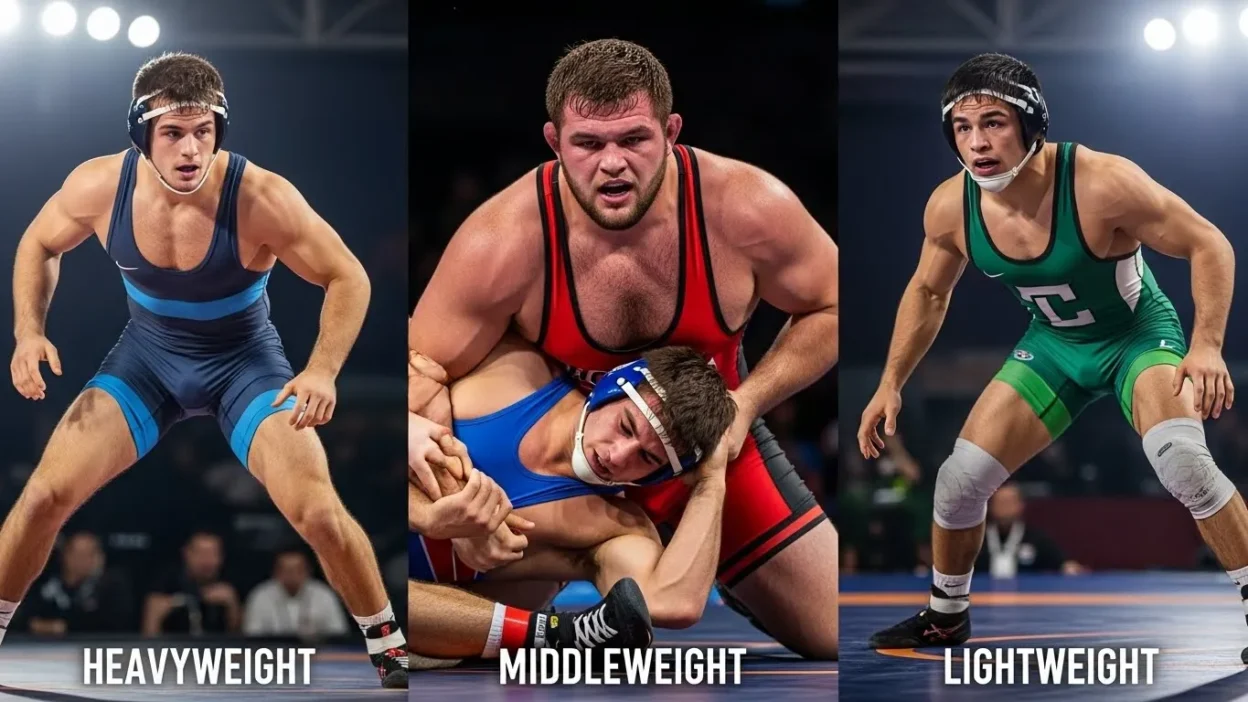
Wrestling is a sport where strength, skill, and strategy meet, but one of the most critical factors for fair competition is weight classes. Weight classes are divisions that group wrestlers by their body weight, ensuring matches are balanced and competitive.
Without these divisions, smaller athletes would face significant disadvantages against larger opponents, making fairness and safety a serious concern.
From youth leagues to high school, college, and international competitions, wrestling weight classes play a crucial role in athlete development and match strategy.
Different wrestling styles such as freestyle, Greco Roman, and folkstyle use slightly different weight divisions, each tailored to the sport’s rules and competitive standards.
Understanding wrestling weight classes is essential not only for athletes and coaches but also for parents and fans who want to follow the sport closely. In this guide, we’ll cover all major wrestling weight divisions, weigh-in rules, safe weight management, and tips to choose the right class for success.
What Are Wrestling Weight Classes?
Wrestling weight classes are categories that group athletes based on their body weight to ensure fair competition. In wrestling, size and weight can greatly affect performance, strength, speed, and endurance. Without weight classes, heavier wrestlers would have a natural advantage, making matches unfair and increasing the risk of injury. Weight classes create a level playing field where skill, technique, and strategy determine the outcome rather than sheer size.
Different wrestling organizations, such as the National Federation of State High School Associations (NFHS), National Collegiate Athletic Association (NCAA), and United World Wrestling (UWW), set specific weight limits for each division. These limits vary depending on the wrestling style, age group, and competition level. For example, high school wrestlers follow NFHS guidelines, while college athletes compete under NCAA weight divisions. International competitions, including the Olympics, use UWW standards for freestyle and Greco-Roman wrestling.
Weight classes also play a key role in match preparation and training. Wrestlers often tailor their nutrition, strength training, and conditioning to stay within their target class while maximizing performance. Coaches carefully monitor athletes to ensure they compete at a weight that balances safety and competitive advantage.
In essence, wrestling weight classes are not just numbers on a chart—they are a fundamental part of the sport that protects athletes, promotes fair competition, and allows wrestlers to showcase their skills at every level.
History of Wrestling Weight Classes
The concept of wrestling weight classes has evolved over centuries to promote fairness and athlete safety. In the early days of wrestling, there were no formal divisions, and competitors of vastly different sizes often faced each other. This led to mismatched contests, where larger wrestlers had a significant advantage, making smaller athletes vulnerable to injury and discouraging participation.
As wrestling grew into an organized sport, especially in the late 19th and early 20th centuries, governing bodies recognized the need for structured weight divisions. Early international competitions introduced broad weight categories, allowing wrestlers to compete against opponents of similar size. Over time, these categories became more precise, reflecting the growing understanding of how weight affects strength, speed, and endurance in matches.
The establishment of weight classes also coincided with the formalization of wrestling styles such as freestyle, Greco-Roman, and folkstyle. Each style adopted slightly different weight divisions to accommodate the rules and competitive strategies unique to the sport. For example, Greco-Roman wrestling emphasizes upper-body strength, influencing how its weight classes were defined.
Modern wrestling continues to refine weight divisions to ensure fair play and adapt to changing athlete demographics. Today, youth, high school, college, and international competitions each have standardized weight classes, with careful attention to safety, healthy weight management, and competitive balance. The evolution of wrestling weight classes demonstrates the sport’s commitment to fairness, inclusivity, and athlete well-being.
Why Weight Classes Matter in Wrestling
Weight classes are one of the most essential aspects of wrestling, as they ensure fair competition and protect athlete safety. Wrestling is a sport where strength, speed, and technique interact closely, and even a small difference in weight can create a significant advantage. Without weight divisions, smaller wrestlers would face physically larger opponents, which could lead to injuries and discourage participation.
Beyond fairness, weight classes encourage strategic competition. Wrestlers can focus on improving skill, agility, and endurance rather than relying solely on size. For coaches and athletes, understanding weight classes helps develop effective training plans, nutrition strategies, and match preparation routines. Wrestlers learn to compete optimally within a division where their body type and strength are best suited.
Weight classes also play a crucial role in long-term athlete health. Extreme mismatches in size can increase the risk of joint injuries, concussions, and muscle strains. By competing within proper weight limits, athletes can train safely, maintain healthy body composition, and reduce the likelihood of overexertion or dangerous weight cutting.
Furthermore, weight classes promote inclusivity in wrestling. They allow athletes of all sizes—from lighter, agile competitors to heavier, powerful wrestlers—to compete and succeed. This balance is seen at all levels, from youth leagues and high school competitions to collegiate and Olympic wrestling.
In short, wrestling weight classes are not just rules—they are the backbone of fair, safe, and competitive wrestling, shaping how athletes train, compete, and excel in the sport.
Youth Wrestling Weight Classes
Youth wrestling is often the first step for young athletes entering the sport, and weight classes are especially important at this level. Children grow at different rates, and even a small difference in weight can significantly affect strength, speed, and performance. Youth weight divisions ensure that competitions are safe, fair, and enjoyable, giving every child a chance to succeed.
Youth wrestling programs usually divide athletes by both age and weight, creating age-specific brackets such as 5–6 years, 7–8 years, and up to 14–15 years. Within each age group, weight classes may range from as low as 40 pounds to over 150 pounds, depending on the organization and region. These divisions allow wrestlers to compete against peers of similar size, minimizing mismatches and reducing injury risk.
Coaches and parents play a critical role in guiding young wrestlers. Proper nutrition, gradual strength development, and healthy habits are emphasized rather than extreme weight cutting. Many youth leagues also implement weight certification programs to track growth and ensure children compete in appropriate divisions.
Youth wrestling weight classes not only level the playing field but also teach children important lessons about discipline, healthy competition, and sportsmanship. By participating in age- and weight-appropriate divisions, young wrestlers can develop skills safely while enjoying the sport, setting the foundation for future high school, collegiate, or even international wrestling careers.
High School Wrestling Weight Classes (NFHS)
High school wrestling in the United States follows the National Federation of State High School Associations (NFHS) guidelines for weight classes. These divisions are designed to create fair and safe competition for teenage athletes, taking into account their growth and physical development.
As of recent NFHS standards, high school wrestling features 14 official weight classes, ranging from 106 pounds for lighter athletes up to 285 pounds for heavyweight competitors. These divisions allow students of all sizes to compete against similarly sized opponents. Weight classes are strictly enforced during official weigh-ins, which typically occur the day before a match or tournament. Wrestlers must meet the weight limit for their chosen class to participate.
High school wrestling also implements a weight certification process to promote healthy competition. Athletes are tested for body fat percentage, and minimum allowable weights are calculated to prevent unsafe rapid weight loss. Coaches monitor students’ growth, strength, and nutrition to ensure athletes compete safely while performing at their best.
Many states allow a small weight allowance—usually one to two pounds—for tournaments, providing flexibility without compromising fairness. Wrestlers may compete at a higher weight class than their natural weight, but competing below a certified minimum is prohibited to protect health.
NFHS weight classes balance competitive fairness, safety, and athletic development. They provide a structured environment where student-athletes can learn discipline, strategy, and sportsmanship while preparing for potential college-level competition and beyond.
College Wrestling Weight Classes (NCAA)
College wrestling in the United States follows the National Collegiate Athletic Association (NCAA) guidelines, which differ slightly from high school weight divisions. NCAA wrestling is primarily for student-athletes competing at the Division I, II, or III levels, and the weight classes are designed to ensure fairness and high-level competition.
Currently, NCAA men’s wrestling features 10 official weight classes, ranging from 125 pounds for lighter competitors to 285 pounds for heavyweight athletes. Each weight class has strict rules for weigh-ins, usually conducted the day before competition. Unlike high school wrestling, NCAA athletes often face more rigorous weight management practices, including monitored nutrition and strength training, to maintain optimal performance at their weight class.
Colleges place strong emphasis on safe weight management. NCAA rules prevent extreme rapid weight loss by regulating minimum body fat percentages and requiring athletes to stay within healthy ranges. Coaches and athletic trainers are heavily involved in ensuring athletes compete safely, balancing competitive advantage with long-term health.
Some wrestlers may choose to move up or down a weight class depending on their body composition, strength, and competition strategy. This decision is carefully considered with input from coaches and nutrition staff to optimize performance without risking health.
NCAA wrestling weight classes provide a competitive framework that emphasizes both skill and physical preparedness. They allow athletes to compete against opponents of similar size while maintaining safety standards, making college wrestling a crucial step for those aiming for national or international competition.
International Wrestling Weight Classes (Freestyle & Greco-Roman)
International wrestling competitions, including the World Championships and Olympics, follow standards set by United World Wrestling (UWW). These competitions feature two main styles: freestyle and Greco-Roman, each with slightly different weight classes to suit the style’s rules and techniques.
In freestyle wrestling, athletes can use their entire body for takedowns, including legs, making speed and agility essential. Freestyle competitions currently have 10 weight classes for men and 10 for women, ranging from lighter divisions like 57 kg (125.5 lbs) for men to heavier divisions like 125 kg (275.5 lbs). Women’s divisions start at 50 kg (110 lbs) and go up to 76 kg (168 lbs) in Olympic events.
Greco-Roman wrestling, on the other hand, restricts holds to the upper body, emphasizing throws and clinch techniques. Weight classes in Greco-Roman wrestling are slightly different, with male divisions starting at 55 kg (121 lbs) and extending to 130 kg (286 lbs). Women do not currently compete in Greco-Roman at the international level.
International wrestling also enforces strict weigh-in procedures. Athletes must meet weight requirements, typically the day before the competition, with no tolerance for underweight divisions. These rules ensure fair competition, reduce injury risk, and maintain integrity across global tournaments.
Understanding international weight classes is essential for athletes aiming to compete at the world stage. Proper preparation, nutrition, and training aligned with these weight divisions can make the difference between success and missed opportunities at elite competitions.
Women’s Wrestling Weight Classes
Women’s wrestling has grown rapidly over the past few decades, becoming a major part of youth, high school, collegiate, and international competitions. Like men’s wrestling, weight classes for women ensure fair competition, athlete safety, and balanced matches.
At the high school level, girls’ wrestling programs typically follow divisions similar to boys, though the weight ranges are slightly adjusted for female athletes. Youth and middle school girls may compete in classes starting around 40–45 pounds, progressing to heavier divisions for older students. High school weight classes generally range from 101 pounds up to 235 pounds.
In college, women’s wrestling has gained recognition, with the NCAA and NAIA supporting official competitions in several weight divisions. Colleges often have 10 standard weight classes for women, with the lightest around 105 pounds and the heaviest up to 235 pounds. Female wrestlers are subject to the same weigh-in rules, weight management standards, and safety protocols as men.
At the international level, including the Olympics, women’s wrestling follows United World Wrestling (UWW) guidelines. Olympic weight classes for women include divisions from 50 kg (110 lbs) to 76 kg (168 lbs). These weight classes are designed to create competitive, safe, and balanced tournaments.
Women’s wrestling weight classes allow athletes of all sizes to compete successfully. They promote skill development, strategy, and athletic growth while prioritizing health and safety. The expansion of women’s divisions worldwide demonstrates the sport’s commitment to inclusivity and provides opportunities for female athletes to excel at every level, from local competitions to the Olympic stage.
Wrestling Weight Class Chart
A wrestling weight class chart is an essential tool for athletes, coaches, and parents to quickly reference divisions across different levels and styles of wrestling. It provides a clear overview of how weight classes are structured, from youth leagues to high school, college, and international competitions.
For example, youth wrestling divisions may start as low as 40 pounds for young beginners and progress incrementally to over 150 pounds for older children. High school wrestlers follow NFHS standards, with 14 weight classes ranging from 106 pounds to 285 pounds. College athletes compete under NCAA guidelines, with 10 divisions from 125 pounds to 285 pounds for men, and similar ranges for women.
International competitions have slightly different divisions based on freestyle and Greco-Roman wrestling. Men’s freestyle classes start at 57 kg (125 lbs) and go up to 125 kg (275 lbs), while women’s Olympic freestyle starts at 50 kg (110 lbs) and ends at 76 kg (168 lbs). Greco-Roman competitions use similar male divisions but emphasize upper-body strength.
Here’s a simplified reference chart (pounds for US, kg for international):
| Level/Style | Lightest | Heaviest | Number of Classes |
| Youth | 40 lbs | 150+ lbs | 8–12 |
| High School (NFHS) | 106 lbs | 285 lbs | 14 |
| College (NCAA Men) | 125 lbs | 285 lbs | 10 |
| College (NCAA Women) | 105 lbs | 235 lbs | 10 |
| International Men (Freestyle/Greco) | 57 kg | 125 kg | 10 |
| International Women (Freestyle) | 50 kg | 76 kg | 10 |
This chart makes it easy to compare divisions across levels, helping wrestlers choose the right class, track progression, and plan for competitions.
Weigh-In Rules and Procedures
Weigh-ins are a critical part of wrestling competitions, ensuring athletes compete in the correct weight class and maintain fairness and safety. The rules and procedures vary slightly depending on the level—youth, high school, college, or international—but the principles remain consistent.
At the high school and college level, weigh-ins typically occur the day before a match or tournament. Wrestlers must step on the scale wearing minimal clothing, such as shorts and a singlet, and meet the weight limit of their registered class. A small allowance, usually one to two pounds, may be permitted depending on the competition rules. Missing weight can result in disqualification or requiring the athlete to move up to a higher weight class.
In international competitions, including the Olympics, weigh-ins are usually conducted on the same day as the match. UWW rules are strict: wrestlers must make weight within their class with no tolerance for underweight limits. Any deviation can prevent participation, emphasizing the importance of proper preparation and weight management.
Weigh-ins also include hydration and health checks in some leagues, particularly for youth and college athletes, to prevent dangerous weight cutting. Coaches are responsible for ensuring their wrestlers comply with regulations, and athletes are encouraged to maintain healthy body weight rather than relying on extreme methods to meet limits.
Overall, weigh-ins are more than a formality—they enforce the structure of wrestling weight classes, protect athlete health, and ensure fair competition across all levels of the sport. Proper preparation and understanding of weigh-in procedures are essential for any wrestler aiming for success.
(FAQs)
1. How many weight classes are there in wrestling?
The number of weight classes depends on the level and style of wrestling. High school has 14 classes, college has 10, and international competitions have 10 classes for men and 10 for women in freestyle wrestling.
2. Do weight classes change every year?
Weight classes are generally stable, but organizations may make small adjustments occasionally. NFHS, NCAA, and UWW periodically review divisions to ensure safety and competitiveness.
3. Can wrestlers compete in multiple weight classes?
No, wrestlers must compete in the weight class for which they are certified. Competing in a different class can result in disqualification unless officially approved in multi-day tournaments.
4. What happens if a wrestler misses weight?
If an athlete fails to make weight, they may be disqualified, moved to a higher weight class, or prevented from competing, depending on the rules of the event.
5. Are weight-cutting practices safe?
Extreme weight cutting is dangerous and discouraged. Safe practices involve gradual adjustments in diet, hydration, and training under supervision. Most organizations enforce minimum body fat and hydration checks.
6. How do international weight classes differ from U.S. classes?
International classes use the metric system and differ slightly in range and number. For example, Olympic men’s freestyle ranges from 57 kg to 125 kg, while high school U.S. divisions range from 106 lbs to 285 lbs.
7. Do women have the same weight classes as men?
Women’s divisions are separate and slightly lighter, reflecting physiological differences. They exist at youth, high school, college, and international levels.
8. Why are weight classes important in wrestling?
They ensure fair competition, protect athlete safety, and allow skill and technique to determine the match outcome rather than size.
Conclusion
Wrestling weight classes are a cornerstone of the sport, providing structure, fairness, and safety for athletes of all ages and skill levels.
From youth leagues to high school, college, and international competitions, weight divisions ensure that matches are balanced and that no wrestler is disadvantaged purely by size.
By organizing competitors into specific categories, wrestling allows skill, technique, and strategy to determine the outcome rather than raw strength or weight.
Understanding weight classes is essential for wrestlers, coaches, and parents alike. Knowledge of the proper divisions helps athletes train effectively, maintain safe body weight, and develop strategies tailored to their class.
It also enables coaches to design training programs that focus on strength, agility, and endurance while prioritizing long-term health. Proper nutrition, hydration, and weight management are critical components of this process, particularly at the high school, college, and international levels.
Weight classes also promote inclusivity, giving wrestlers of all sizes the opportunity to compete and succeed.
Female wrestling has expanded globally, with divisions at every competitive level, further emphasizing the sport’s commitment to fairness and accessibility.
In summary, wrestling weight classes are more than just numbers on a chart—they are a fundamental part of the sport that protects athletes, promotes healthy competition, and allows wrestlers to excel at every stage.
By understanding and respecting these divisions, athletes can maximize performance, enjoy the sport safely, and achieve success whether in local competitions, collegiate tournaments, or on the international stage.

I’m a passionate writer at Talk2Flirt.com, dedicated to creating fun, flirty, and engaging content that helps people connect, laugh, and keep the conversation flowing.