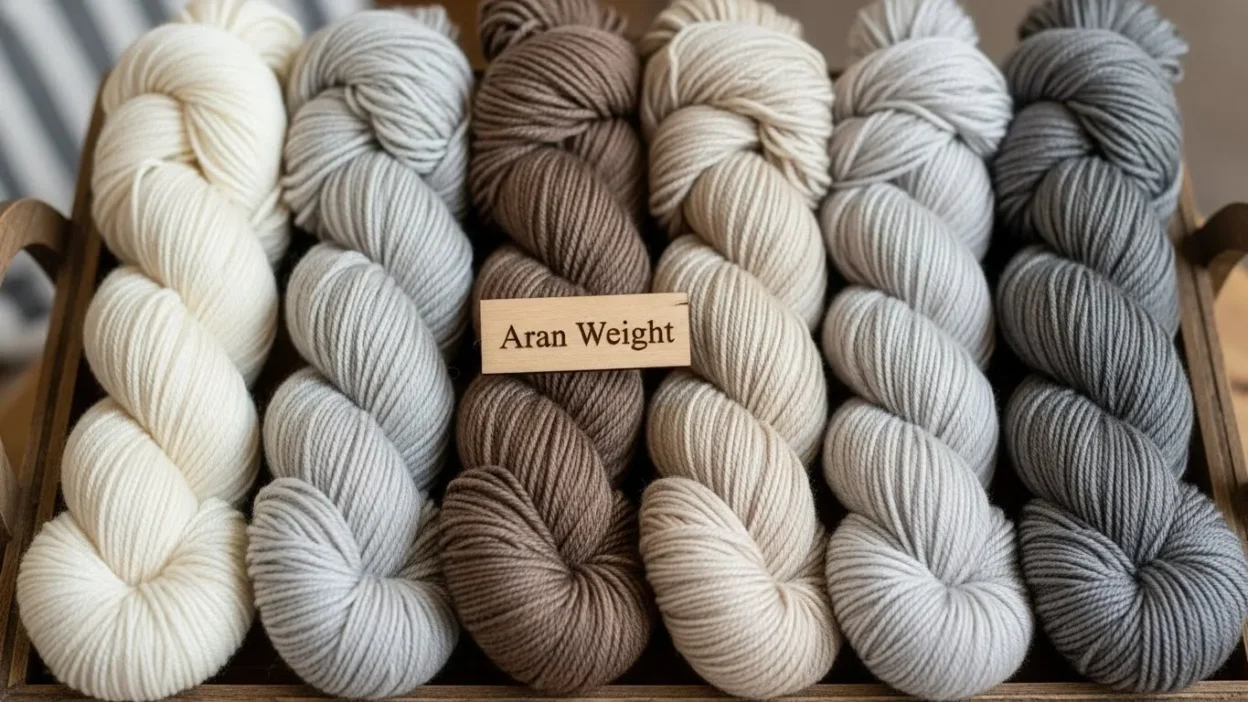
Aran weight yarn is one of the most versatile and widely used yarn weights in both knitting and crochet, making it a favorite among beginners and experienced crafters alike.
Known for its medium-heavy thickness, aran weight yarn strikes the perfect balance between warmth, durability, and stitch definition. It is thick enough to work up quickly, yet not so bulky that it feels stiff or difficult to handle.
This makes it ideal for a wide range of projects, from cozy sweaters and scarves to blankets, hats, and home décor items.
Often confused with worsted weight yarn, aran weight yarn is slightly thicker, resulting in a denser and warmer fabric.
Understanding this subtle difference can greatly impact the final look and feel of a project.
In this guide, you’ll learn exactly what aran weight yarn is, how it compares to other yarn weights, the best tools to use with it, and which projects it’s best suited for, so you can confidently choose the right yarn for your next creation.
What Is Aran Weight Yarn?
Aran weight yarn is a medium-to-heavy yarn category that sits between worsted weight and bulky yarn on the yarn weight spectrum. It is valued for its balance of thickness, flexibility, and warmth, making it suitable for a wide variety of knitting and crochet projects. While yarn weight classifications can vary slightly between regions and manufacturers, aran weight yarn is generally thicker than standard worsted weight yarn and produces a denser fabric.
The term “aran” originates from traditional knitwear, where this yarn weight was commonly used to create sturdy, textured garments. Over time, the name became associated with a specific thickness rather than a particular pattern style. Today, aran weight yarn is recognized for its excellent stitch definition, which allows textured stitches, cables, and patterns to stand out clearly.
One reason aran weight yarn often causes confusion is that it is sometimes labeled as worsted weight by certain brands. This overlap means that two yarns labeled differently may feel almost the same, while others can vary noticeably in thickness. Because of this, it’s important to check gauge information rather than relying on the label alone.
Aran weight yarn typically works up faster than lighter yarns, making it a popular choice for projects that need to be completed efficiently. At the same time, it remains comfortable to work with for extended periods, unlike much bulkier yarns. Whether you’re creating garments, accessories, or home décor items, understanding what aran weight yarn truly is will help you make better choices and achieve consistent, professional-looking results.
Aran Weight Yarn Thickness & Measurements
Understanding the thickness and measurements of aran weight yarn is essential for choosing the right patterns and achieving the desired fabric texture. Aran weight yarn is considered a medium-heavy yarn and is noticeably thicker than DK or standard worsted weight yarn, yet slimmer than bulky yarn. This in-between thickness is what gives aran yarn its versatility across many types of projects.
One common way to measure yarn thickness is wraps per inch (WPI). Aran weight yarn usually falls in the range of 8 to 10 wraps per inch, depending on the fiber type and how tightly the yarn is spun. Yarns with fewer wraps per inch are thicker, while those with more wraps are thinner. This measurement can be especially helpful when the yarn label is unclear or when substituting one yarn for another.
In terms of gauge, aran weight yarn typically produces a slightly denser fabric than worsted weight yarn. This density makes it ideal for warm garments and structured pieces, as it holds its shape well without feeling overly stiff. The added thickness also enhances stitch definition, allowing cables, ribbing, and textured stitches to stand out clearly.
Fiber content can influence how thick aran weight yarn feels. Wool and wool blends often appear loftier and warmer, while cotton aran yarn may feel heavier and more compact. Acrylic versions tend to be smooth and consistent, offering predictable results.
Because thickness directly affects drape, warmth, and yarn usage, understanding aran weight yarn measurements helps prevent sizing issues and unexpected results. Taking the time to evaluate thickness—rather than relying solely on yarn labels—ensures better project planning and more satisfying finished pieces.
Aran Weight Yarn vs Other Yarn Weights
Aran weight yarn is often compared to other yarn weights because it sits in the middle of the yarn weight spectrum, making distinctions sometimes subtle but important. Understanding these differences helps ensure your finished project has the right texture, warmth, and fit.
When comparing aran weight yarn vs worsted weight yarn, aran is generally slightly thicker. While worsted weight yarn produces a balanced, everyday fabric, aran weight yarn creates a denser and warmer result. This makes aran a better choice for cold-weather garments or projects where structure is important. However, because the difference is small, the two are sometimes interchangeable with careful gauge adjustments.
Compared to DK weight yarn, aran weight yarn is noticeably thicker and heavier. DK yarn creates lighter, more fluid fabrics, while aran yarn results in sturdier pieces. Substituting aran yarn for DK without adjustments can lead to overly stiff garments or incorrect sizing.
On the other end of the spectrum, bulky weight yarn is significantly thicker than aran. Bulky yarn works up much faster but often sacrifices stitch detail and drape. Aran weight yarn offers a middle ground, providing speed without losing definition, making it ideal for textured stitches and cables.
Substitution between yarn weights is possible, but it requires attention to gauge, needle or hook size, and fabric behavior. Aran weight yarn excels when you want warmth, durability, and clearly defined stitches without the heaviness of bulky yarn. Knowing how it compares to other yarn weights allows you to choose the best option for your pattern and avoid common sizing or texture issues.
Aran Weight Yarn Gauge Guide
Gauge plays a crucial role when working with aran weight yarn, especially for garments and fitted projects. Because aran yarn is thicker than worsted weight, even small variations in gauge can significantly affect the final size, drape, and overall appearance of a project. Understanding and checking gauge before you begin can save time and prevent frustration later.
For knitting, aran weight yarn typically produces a gauge of around 16–18 stitches and 22–24 rows per 4 inches (10 cm) using medium-sized needles. However, this can vary depending on the yarn’s fiber content, ply, and how tightly or loosely you knit. Wool aran yarns often feel more elastic and forgiving, while cotton or acrylic aran yarns may produce a firmer fabric.
In crochet, gauge is generally measured in single crochet or double crochet stitches, and results can vary widely based on stitch style and tension. Because crocheted fabric tends to be thicker than knitted fabric, crocheters may need to use a slightly larger hook to maintain a soft, flexible texture.
Creating a gauge swatch is essential when using aran weight yarn. A small swatch allows you to see how the yarn behaves, whether the fabric feels too stiff or too loose, and if adjustments are needed. If your gauge is too tight, increasing needle or hook size can improve drape. If it’s too loose, switching to a smaller size helps create structure.
Taking the time to understand and adjust gauge ensures that aran weight yarn performs exactly as intended, resulting in a polished and well-fitting finished project.
Recommended Needle & Hook Sizes for Aran Weight Yarn
Choosing the correct needle or hook size is essential when working with aran weight yarn, as it directly affects stitch definition, fabric density, and overall comfort of the finished piece. Because aran yarn is thicker than worsted weight, it generally requires slightly larger tools to create balanced and flexible fabric.
For knitting, aran weight yarn is commonly paired with needles ranging from US 7 to US 9 (4.5–5.5 mm). Smaller needles within this range produce a tighter, more structured fabric, which works well for garments like sweaters or cardigans that need shape and durability. Larger needles create a looser fabric with better drape, ideal for scarves, shawls, or relaxed-fit clothing. The exact needle size often depends on the pattern and the yarn’s fiber composition.
For crochet, aran weight yarn typically works best with hooks sized 5.5–6.5 mm (US I–K). A smaller hook results in dense, firm stitches that are great for items like bags or home décor, while a larger hook creates a softer and more flexible texture suitable for wearables and blankets.
It’s important to remember that these sizes are general guidelines, not fixed rules. Individual tension, stitch style, and yarn construction all influence the final outcome. Testing your yarn with different needle or hook sizes can help you find the best match for your project.
By selecting the right tools and making small adjustments when needed, you can fully take advantage of aran weight yarn’s versatility and achieve professional-quality results in both knitting and crochet projects.
Common Fibers Used in Aran Weight Yarn
Aran weight yarn is available in a wide range of fiber types, and each fiber brings its own characteristics in terms of warmth, texture, durability, and care requirements. Choosing the right fiber is just as important as selecting the correct yarn weight, as it can greatly influence the final outcome of a project.
Wool aran weight yarn is one of the most popular options. Wool is naturally warm, elastic, and breathable, making it ideal for sweaters, cardigans, and winter accessories. Its elasticity helps stitches bounce back into shape, which is especially useful for textured patterns like cables and ribbing. Wool aran yarns often feel lighter than they look due to their loft.
Acrylic aran weight yarn is another common choice, particularly for beginners. It is affordable, widely available, and easy to care for, as most acrylic yarns are machine washable. Acrylic aran yarn holds its shape well and comes in a wide range of colors, though it may feel less breathable than natural fibers.
Cotton aran weight yarn offers a different experience. It is heavier, less elastic, and more breathable, making it suitable for home décor items, summer garments, and structured projects. However, because cotton lacks stretch, it can feel tiring to work with for long periods.
Blended aran yarns, such as wool-acrylic or cotton-acrylic blends, combine the best qualities of multiple fibers. These blends often balance warmth, durability, softness, and ease of care.
Understanding fiber behavior helps ensure that aran weight yarn performs well for its intended purpose, resulting in comfortable, long-lasting, and visually appealing projects.
Best Projects for Aran Weight Yarn
Aran weight yarn is highly versatile, making it suitable for a wide variety of knitting and crochet projects. Its medium-heavy thickness provides warmth, structure, and excellent stitch definition, which allows both simple and textured designs to shine.
One of the most popular uses for aran weight yarn is garments. Sweaters, cardigans, and pullovers benefit from the yarn’s ability to create a dense yet comfortable fabric that holds its shape well. Aran yarn is especially well-suited for textured patterns, such as cables and ribbing, where clear stitch definition is essential.
Accessories are another excellent option. Hats, scarves, cowls, and mittens work up quickly with aran weight yarn and offer warmth without excessive bulk. Because the stitches are easy to see, these projects are also beginner-friendly and ideal for practicing new techniques.
For home décor, aran weight yarn is a reliable choice. Blankets, afghans, throws, and cushion covers made with aran yarn are cozy and durable. The yarn’s thickness provides insulation and structure, making it perfect for items that need to withstand frequent use. While aran weight blankets take longer to make than bulky yarn versions, they offer better drape and stitch clarity.
Aran weight yarn can also be used for baby projects, such as blankets or outerwear, when soft fibers are chosen. However, it’s important to consider weight and breathability to ensure comfort.
Overall, aran weight yarn excels in projects where warmth, durability, and stitch definition are priorities, making it a dependable choice for both practical and decorative creations.
Is Aran Weight Yarn Beginner-Friendly?
Aran weight yarn is widely considered beginner-friendly, making it an excellent choice for those who are new to knitting or crochet. Its medium-heavy thickness makes stitches easy to see and identify, which helps beginners learn basic techniques with more confidence. Unlike very thin yarns that can be hard to control, aran weight yarn provides enough substance to feel stable in the hands.
Another reason aran yarn is suitable for beginners is how quickly projects work up. The thicker strand means fewer stitches are needed to create noticeable progress, which can be motivating for new crafters. Seeing results sooner helps maintain interest and reduces frustration, especially during early learning stages.
Aran weight yarn is also forgiving when it comes to tension. Minor inconsistencies in stitch size are less noticeable compared to lighter yarns, resulting in a more polished-looking finished piece. This makes it easier for beginners to practice without feeling discouraged by small mistakes.
From a practical standpoint, aran weight yarn is widely available in many fibers and price ranges. Beginners can easily find affordable acrylic options for practice or soft wool blends for wearable projects. Common beginner patterns such as scarves, hats, and simple blankets are frequently designed for aran weight yarn, providing plenty of accessible project options.
However, beginners should still take care to choose comfortable tools and avoid overly heavy projects at first. Starting with small accessories allows new crafters to build skills without strain. Overall, aran weight yarn offers a balanced combination of visibility, ease of use, and versatility, making it a smart and confidence-building choice for beginners.
Advantages of Using Aran Weight Yarn
Aran weight yarn offers several advantages that make it a popular choice for both knitting and crochet projects. One of its biggest strengths is its excellent stitch definition. Because the yarn is thick enough to clearly show individual stitches, textured patterns such as cables, ribbing, and seed stitch stand out beautifully. This makes aran yarn ideal for detailed designs where clarity matters.
Another major advantage is versatility. Aran weight yarn works well across a wide range of projects, including garments, accessories, and home décor items. Whether you’re making a warm sweater, a cozy blanket, or a sturdy cushion cover, aran yarn provides the right balance of structure and comfort.
Warmth and durability are also key benefits. The slightly heavier thickness of aran yarn creates denser fabric, which offers better insulation than lighter yarn weights. This makes it especially suitable for cold-weather clothing and cozy home items. At the same time, aran weight yarn is durable enough to withstand regular use, particularly when made from wool blends or acrylic fibers.
Aran weight yarn also allows for faster project completion compared to lighter yarns. Fewer stitches are required to cover the same area, which can be motivating and time-saving, especially for larger projects.
Lastly, aran yarn is widely available and comes in many fiber options and colors, making it accessible for all skill levels and budgets. These combined advantages explain why aran weight yarn remains a staple in many yarn collections.
Disadvantages of Aran Weight Yarn
While aran weight yarn is highly versatile, it does come with a few drawbacks that crafters should consider before starting a project. One of the most common disadvantages is its heavier finished weight. Garments made with aran yarn, such as sweaters or cardigans, can feel noticeably heavier than those made with lighter yarn weights. This may cause discomfort for some wearers, especially during extended use.
Another limitation is reduced suitability for warm climates. Because aran weight yarn creates dense, insulating fabric, it can feel too warm for summer garments or for people living in hotter regions. In these cases, lighter yarn weights or breathable fibers may be a better option.
Aran weight yarn also uses more yarn than thinner weights. Larger projects like blankets or long sweaters require higher yardage, which can increase cost and project time. This is particularly important when working with premium fibers such as wool or specialty blends.
For beginners, aran yarn can sometimes feel physically demanding when used in large projects. The added weight of the yarn and fabric can cause hand or wrist fatigue if worked for long periods without breaks. Additionally, dense fabrics made with small needles or hooks may lack drape if not properly planned.
Finally, because aran weight yarn is often confused with worsted weight yarn, label inconsistencies can lead to gauge issues. Without careful swatching, substitutions may result in incorrect sizing or stiffness.
Understanding these disadvantages allows crafters to plan more effectively and choose aran weight yarn only when it truly suits the project’s needs.
Frequently Asked Questions About Aran Weight Yarn
Is aran weight yarn the same as worsted weight yarn?
Aran weight yarn is slightly thicker than standard worsted weight yarn, though the difference can be subtle. Some brands label aran yarn as worsted, which causes confusion. Always check gauge and wraps per inch rather than relying only on the label.
Can beginners use aran weight yarn?
Yes, aran weight yarn is very beginner-friendly. Its thickness makes stitches easy to see, and projects work up faster, which helps build confidence. Simple scarves, hats, and blankets are great starting projects.
What needle size is best for aran weight yarn?
For knitting, needles in the range of US 7–9 (4.5–5.5 mm) are commonly used. For crochet, hooks between 5.5–6.5 mm usually work well. The exact size depends on the pattern and your personal tension.
Is aran weight yarn good for blankets?
Aran weight yarn is an excellent choice for blankets. It creates warm, cozy fabric with good stitch definition. While it requires more yarn than lighter weights, the finished blanket is durable and comfortable.
Can aran weight yarn be substituted for other yarn weights?
Aran yarn can sometimes be substituted for worsted weight yarn, but gauge adjustments are often necessary. Substituting for DK or bulky yarn is not recommended without significant pattern modifications.
What types of fibers are common in aran weight yarn?
Aran weight yarn is available in wool, acrylic, cotton, and blended fibers. Each fiber affects warmth, elasticity, and care requirements differently.
These answers address the most common concerns and help crafters confidently work with aran weight yarn.
Conclusion
Aran weight yarn is a dependable and versatile choice that bridges the gap between lighter and heavier yarn weights.
Its medium-heavy thickness offers an ideal balance of warmth, structure, and stitch definition, making it suitable for a wide range of knitting and crochet projects.
From textured sweaters and cozy accessories to durable blankets and home décor, aran weight yarn consistently delivers reliable and professional-looking results.
Understanding how aran weight yarn compares to other yarn weights, how to select the right tools, and how fiber choices affect performance allows you to plan projects with confidence.
While it may feel heavier than lighter yarns and require careful gauge checking, these considerations are easily managed with proper preparation and swatching.
Whether you’re a beginner looking for an easy-to-handle yarn or an experienced crafter seeking excellent stitch clarity and durability, aran weight yarn remains a practical and rewarding option.
By choosing the right fiber, pattern, and needle or hook size, you can fully take advantage of what aran weight yarn has to offer and create projects that are both beautiful and long-lasting.